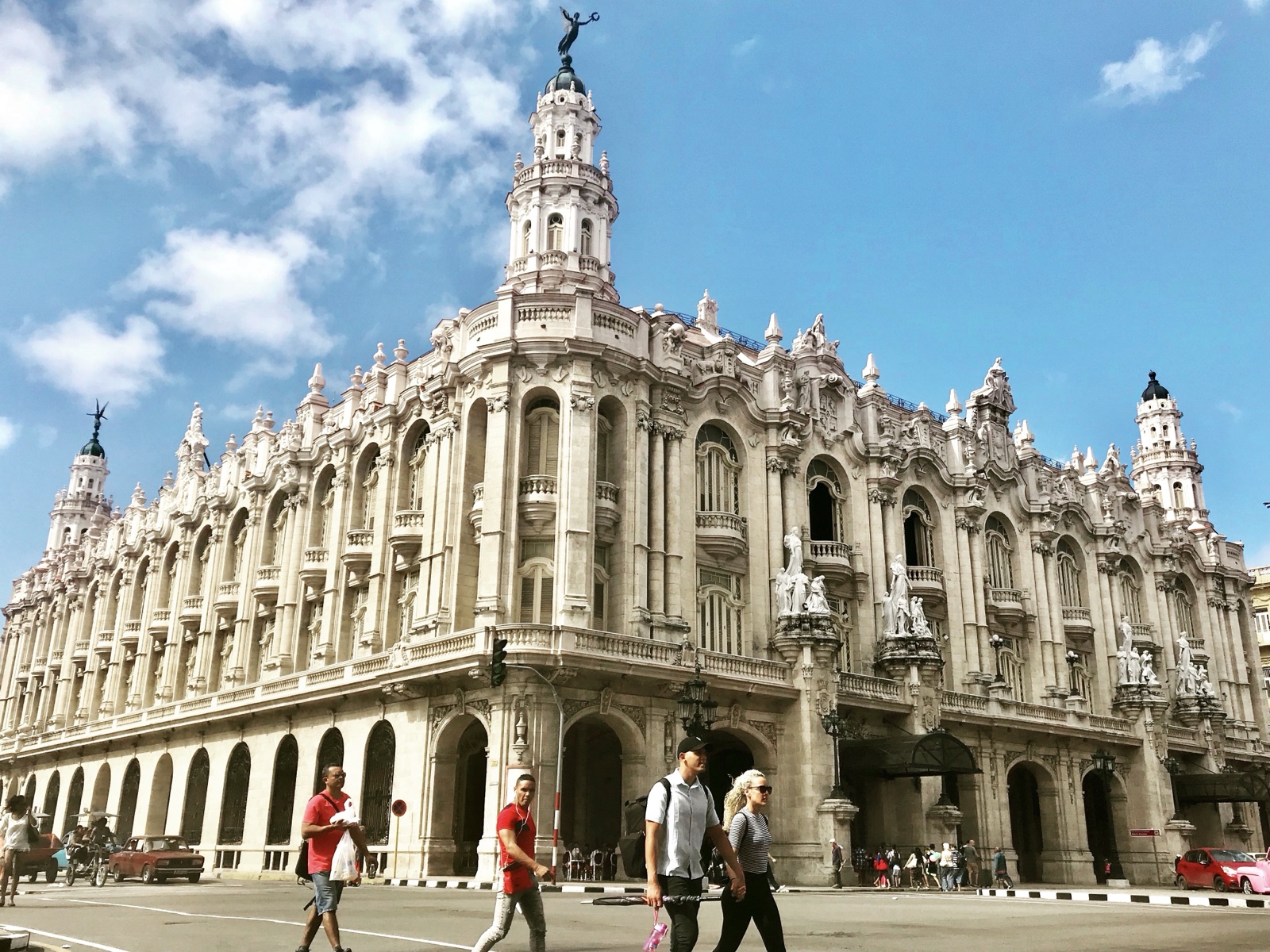
“Galicia is poor,
and to Havana I go…
Farewell, farewell, treasures
of my heart!”
«Galicia está probe,
i á Habana me vou…
¡Adiós, adiós, prendas
do meu corazón!»
—Rosalía de Castro, “¡Pra a Habana!”, Follas Novas (1880) —Rosalía de Castro, «¡Pra a Habana!», Follas Novas (1880)
Between 1880 and 1930, more than a million Galicians left home. Set against the size of its population, no region of Spain sent a greater share of its people across the Atlantic, and no single city received more of them than Havana.
Entre 1880 e 1930, máis dun millón de galegos deixaron a súa terra. En proporción á súa poboación, ningunha rexión de España enviou unha parte maior da súa xente ao outro lado do Atlántico, e ningunha cidade recibiu tantos como A Habana.
It is not, in the main, a story of adventure. It is a story about land that could not be divided again, about a conscription system that anyone with money could buy their way out of and no one without it could escape, and about a passage a family could afford only by mortgaging what little it held. Galicians left because staying had stopped working.
Non é, no esencial, unha historia de aventura. É unha historia sobre unha terra que xa non se podía dividir máis, sobre un sistema de quintas do que calquera con diñeiro podía librarse e do que ninguén sen el escapaba, e sobre unha pasaxe que unha familia só podía pagar hipotecando o pouco que tiña. Os galegos marcharon porque quedar deixara de funcionar.
What they made on the other side is the surprising part. The Galician anthem was first performed in Havana, not in Galicia. The Galician Academy was conceived in Havana and paid for from Havana. The first newspaper written entirely in Galician was printed in Havana. And when the money came home it built schools, 336 of them, in a country where most adults could not read.
O que fixeron na outra beira é a parte sorprendente. O himno galego interpretouse por primeira vez na Habana, non en Galiza. A Academia Galega concibiuse na Habana e pagouse desde a Habana. O primeiro xornal escrito integramente en galego imprimiuse na Habana. E cando o diñeiro volveu á casa construíu escolas, 336 delas, nun país onde a maioría dos adultos non sabía ler.
This visualization follows that circuit: the leaving, the crossing, the four centuries of Atlantic traffic that made Cuba the obvious destination, the lives made there, the institutions built there, and what came back.
Esta visualización segue ese circuíto: a partida, a travesía, os catro séculos de tráfico atlántico que fixeron de Cuba o destino evidente, as vidas feitas alí, as institucións construídas alí, e o que volveu.
Chapter OneCapítulo primeiro
Why They LeftPor Que Marcharon
The Land That Could Not FeedA Terra Que Non Daba Sustentado
Nineteenth-century Galicia lived on smallholdings, on the feudal land rents known as foros, and on agricultural labor. It was an economy with no margin. When a harvest failed or a market collapsed, nothing caught the fall.
A Galiza do século XIX vivía de minifundios, das rendas feudais coñecidas como foros e do traballo agrícola. Era unha economía sen marxe. Cando fallaba unha colleita ou se desfacía un mercado, nada amortecía o golpe.
An inheritance system that kept subdividing already small parcels made it worse. For a son without enough land, without savings, and without a path to a household of his own, emigration was not a rejection of the family. It was a way of supporting it from a distance while building something independent.
Un sistema hereditario que seguía a subdividir parcelas xa pequenas empeoraba a situación. Para un fillo sen terra abondo, sen aforros e sen camiño cara a unha casa propia, emigrar non era rexeitar a familia. Era o xeito de mantela desde lonxe mentres construía algo seu.
Three shocks in particular pushed the countryside past what it could absorb:
Tres golpes en particular empurraron o campo máis alá do que podía absorber:
- Competition from French, American, Argentine and Uruguayan meat collapsed prices and cut Galician beef exports.
- Vine disease arrived in waves. Oidium came through the wine districts in 1850–60, mildew through the Ribeiro in 1886–87, then phylloxera in 1889–93, and each wave took a harvest with it.
- The ironworks closed, unable to withstand Asturian and Basque steelmaking. When the Sargadelos blast furnaces went out in 1875, they took with them much of what industrial work Galicia had.
- A competencia da carne francesa, americana, arxentina e uruguaia afundiu os prezos e reduciu as exportacións de vacún galego.
- As enfermidades da vide chegaron en ondas. O oídio percorreu as comarcas vitícolas en 1850–60, o mildeu o Ribeiro en 1886–87 e a filoxera chegou en 1889–93, e cada onda levou consigo unha colleita.
- As ferrarías pecharon, incapaces de resistir a siderurxia asturiana e vasca. Cando os altos fornos de Sargadelos se apagaron en 1875, levaron con eles boa parte do pouco traballo industrial que Galiza tiña.
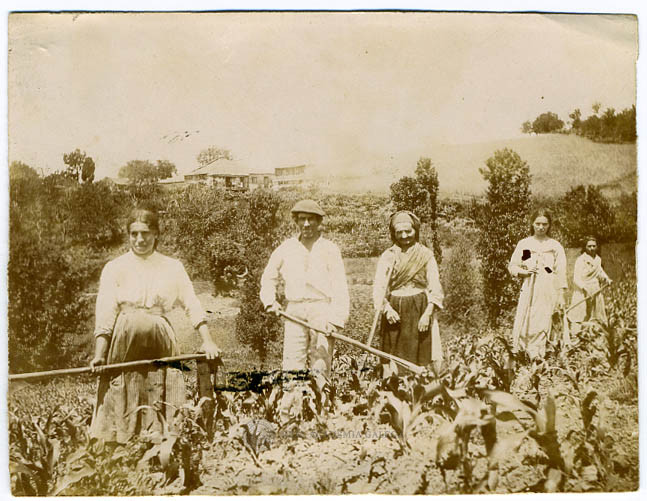
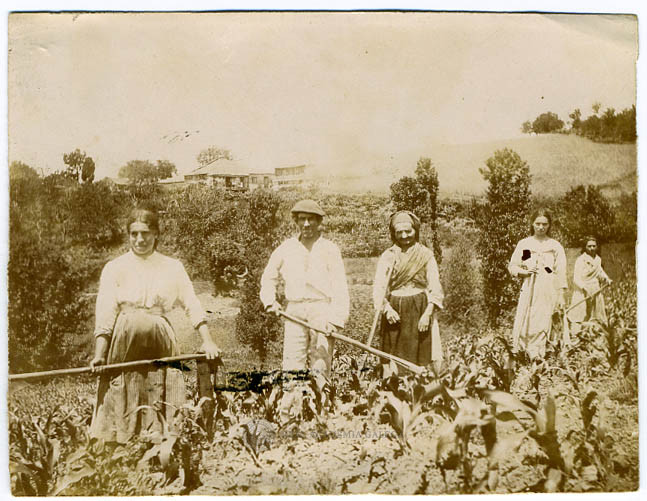
Rural Galicia, late nineteenth century Galiza rural, finais do século XIX
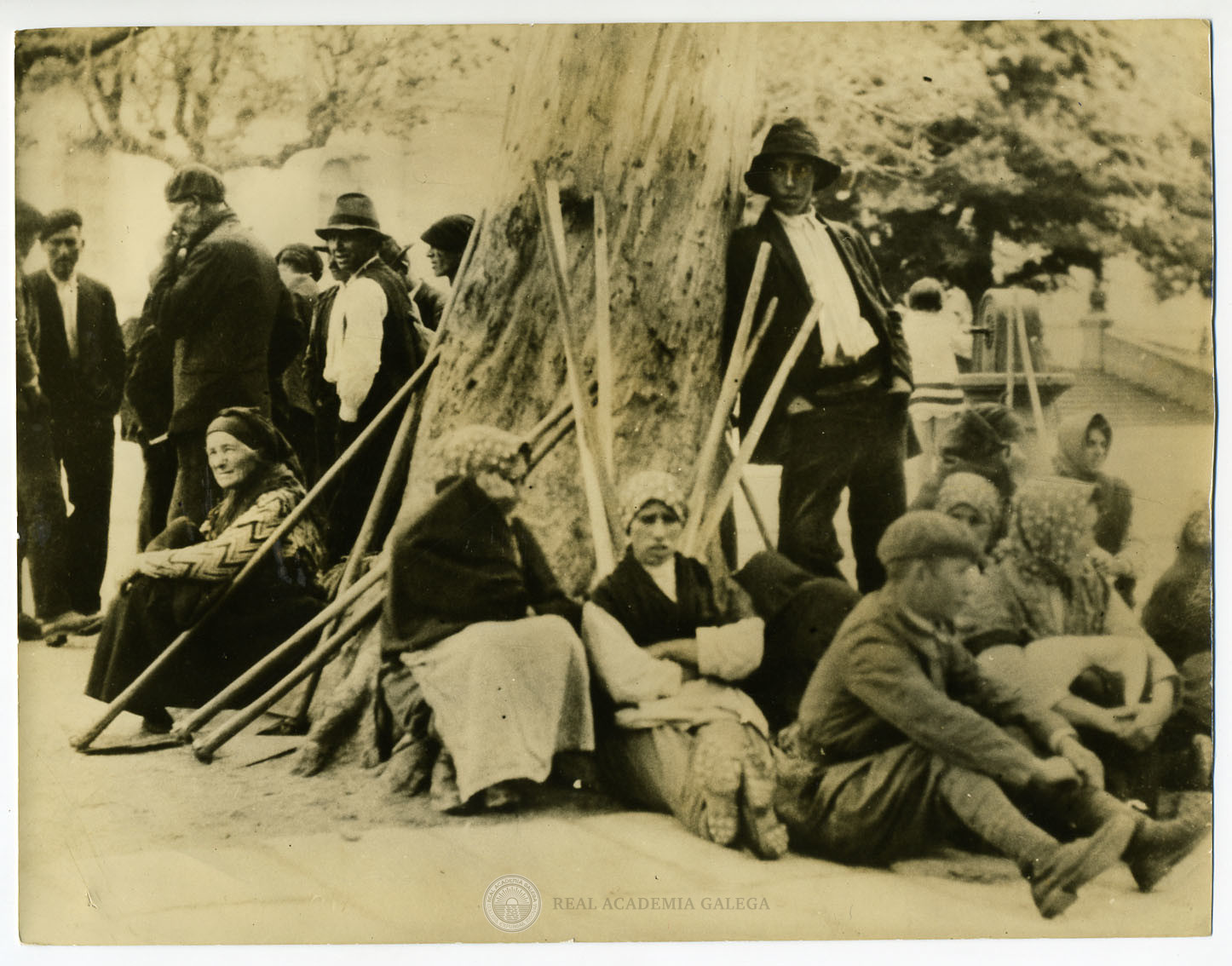
A holding was worked by everyone in the house: women, men, the old, the young. The photographs of the period rarely show a farmer. They show a household.
A leira traballábaa toda a casa: mulleres, homes, vellos e novos. As fotografías da época poucas veces amosan un labrego. Amosan unha familia enteira.
Divided among heirs generation after generation, the plots grew too small to feed the people standing on them.
Divididas entre herdeiros xeración tras xeración, as parcelas fixéronse pequenas de máis para alimentar a quen as traballaba.
“Misery was always the number one driving force of emigration.” «A miseria foi sempre o primeiro motor da emigración.»— Antonio Meijide Pardo
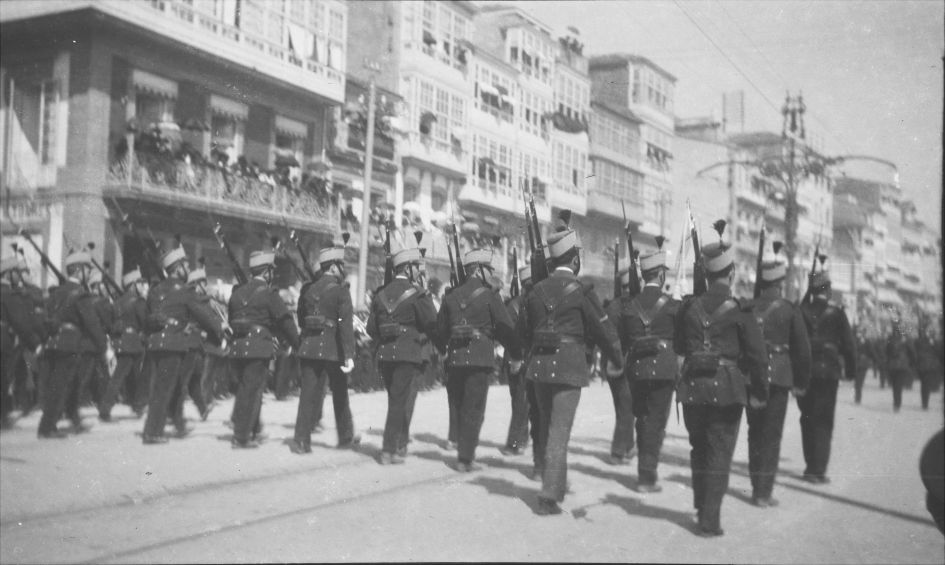
Military review, A Coruña, late nineteenth century Revista militar, A Coruña, finais do século XIX
Compulsory military service, introduced in 1835, became a second grievance of the rural poor, because it could be bought out.
O servizo militar obrigatorio, instaurado en 1835, converteuse nun segundo agravio para os pobres do rural, porque se podía comprar.
Exemption cost between 1,500 and 2,000 pesetas. Insurers would find a substitute to serve in your place for 500 to 1,250.
A exención custaba entre 1.500 e 2.000 pesetas. As aseguradoras atopaban un substituto que servise no teu lugar por entre 500 e 1.250.
A head of cattle fetched 225 to 300 pesetas, and a typical household owned three. Buying a son out of the army meant selling the herd, and often not even that was enough.
Unha cabeza de gando valía entre 225 e 300 pesetas, e unha casa media tiña tres. Librar un fillo do exército significaba vender a cabana enteira, e moitas veces nin iso chegaba.
Chapter TwoCapítulo segundo
The CrossingA Travesía
The PullA Atracción
The receiving countries were not identical, but they advertised the same things. Land to clear and settle. Thin populations and a hunger for labor, sharpened in Cuba and Brazil by the abolition of slavery. Governments that wanted immigrants, a policy the Argentine jurist J. B. Alberdi reduced to four words, to govern is to populate. Capital arriving from Europe and the United States. Economies built on exporting sugar, coffee and wheat. And, above all, the promise of movement upward. Everything, as the phrase went, was still to be made.
Os países receptores non eran idénticos, pero anunciaban o mesmo. Terra por rozar e poboar. Poboacións escasas e fame de man de obra, agudizada en Cuba e no Brasil pola abolición da escravitude. Gobernos que querían inmigrantes, política que o xurista arxentino J. B. Alberdi reduciu a catro palabras, gobernar é poboar. Capital chegado de Europa e dos Estados Unidos. Economías construídas sobre a exportación de azucre, café e trigo. E, sobre todo, a promesa de ascenso. Todo estaba, como se dicía, aínda por facer.
Galicia answered that call harder than almost anywhere in Spain. Only the Canary Islands sent a greater share of their people abroad.
Galiza respondeu a esa chamada con máis forza que case calquera outro lugar de España. Só as Illas Canarias enviaron ao estranxeiro unha porcentaxe maior da súa xente.
Annual emigration by Spanish province, c. 1889 Emigración anual por provincia española, c. 1889
| ProvinceProvincia | Emigrants per 10,000 inhabitantsEmigrantes por 10.000 habitantes | DensityDensidade |
|---|---|---|
| Canarias | 140 | 40 |
| Pontevedra (Galicia)Pontevedra (Galiza) | 122 | 102 |
| A Coruña (Galicia)A Coruña (Galiza) | 110 | 77 |
| Ourense (Galicia)Ourense (Galiza) | 77 | 58 |
| Lugo (Galicia)Lugo (Galiza) | 47 | 44 |
| BiscayBiscaia | 21 | 106 |
| Balearic IslandsIllas Baleares | 16 | 62 |
| GipuzkoaGuipúscoa | 10 | 91 |
| Madrid | 10 | 85 |
All four Galician provinces sit above every non-island province listed. Source: A. Eiras Roel, “Sobre las motivaciones de la emigración gallega a América y otros aspectos: un enfoque comparativo”, R.C.G. 5º Centenario, no. 2, 1989. Reduced sample. As catro provincias galegas están por riba de todas as provincias peninsulares listadas. Fonte: A. Eiras Roel, «Sobre las motivaciones de la emigración gallega a América y otros aspectos: un enfoque comparativo», R.C.G. 5º Centenario, n.º 2, 1989. Mostraxe reducida.
The JourneyA Viaxe
Passage was arranged by a network of local operators known as ganchos or garroteiros, hooks and garrotters. They worked with shipping companies and overseas contractors, and they were paid per body delivered. Their recruiting patter promised a country where nothing failed and no one was turned away.
A pasaxe organizábaa unha rede de axentes locais coñecidos como ganchos ou garroteiros. Traballaban con navieiras e con contratistas de ultramar, e cobraban por cada persoa entregada. O seu discurso de recrutamento prometía un país onde nada fallaba e a ninguén se lle pechaba a porta.
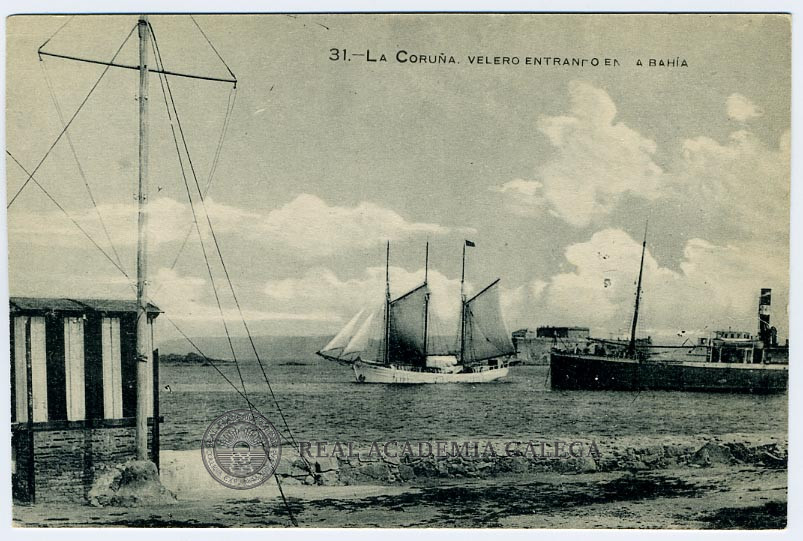
Under sail, the crossing to Havana took more than forty-five days. Steam cut it to nine. With steam came bigger ships, better conditions, and foreign transatlantic companies that displaced Galician shipowners from their own emigrant trade entirely.
A vela, a travesía á Habana levaba máis de corenta e cinco días. O vapor reduciuna a nove. Con el chegaron barcos maiores, mellores condicións e compañías transatlánticas estranxeiras que desprazaron por completo os armadores galegos do seu propio tráfico de emigrantes.
Duration of the voyage to Havana, by decade (days) Duración da viaxe á Habana, por década (días)
| DecadeDécada | Sailing shipsVeleiros | SteamshipsVapores |
|---|---|---|
| 1850–59 | 45.6 | — |
| 1860–69 | 44.4 | 29.0 |
| 1870–79 | 42.0 | 18.3 |
| 1880–89 | — | 18.0 |
| 1890–99 | — | 17.0 |
| 1900–09 | — | 15.7 |
| 1910–19 | — | 10.0 |
| 1920–29 | — | 9.0 |
| 1930–39 | — | 9.0 |
Source: A. Vázquez González, Emigración gallega a América. Fonte: A. Vázquez González, Emigración gallega a América.
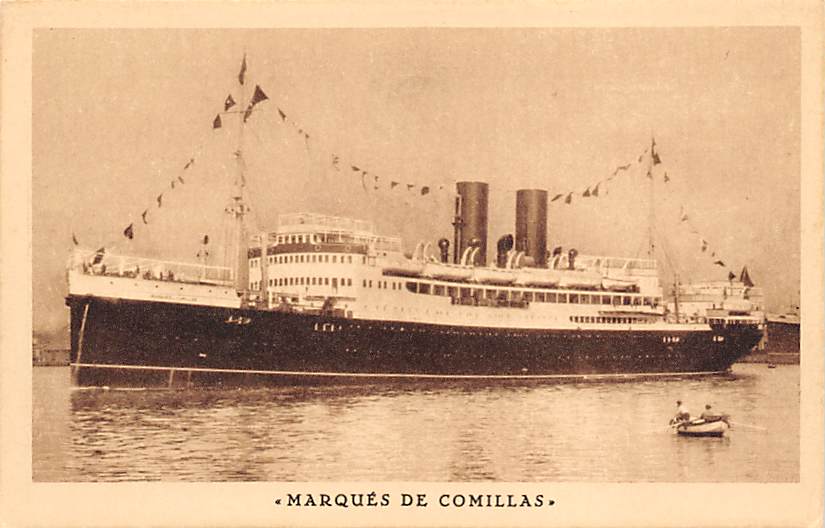
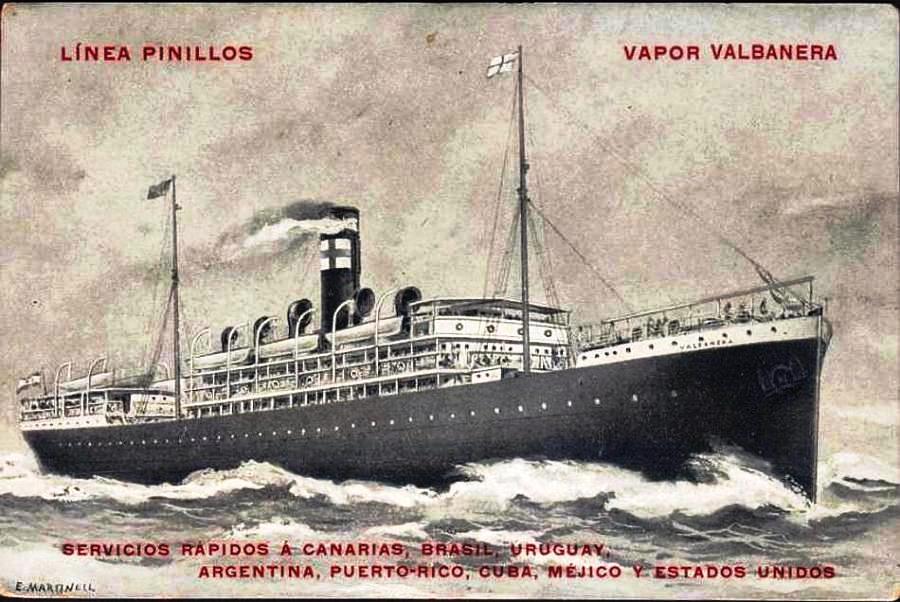
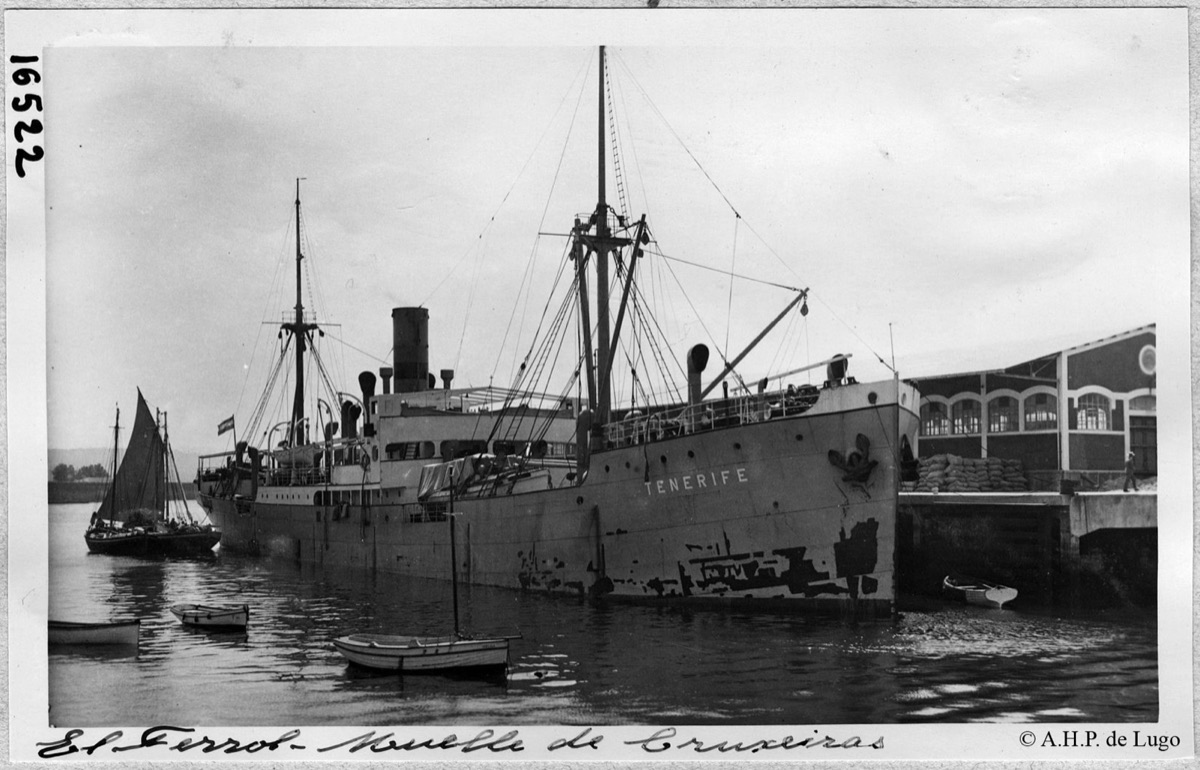
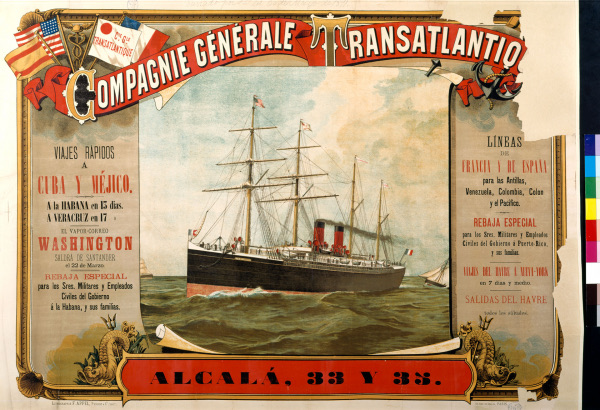
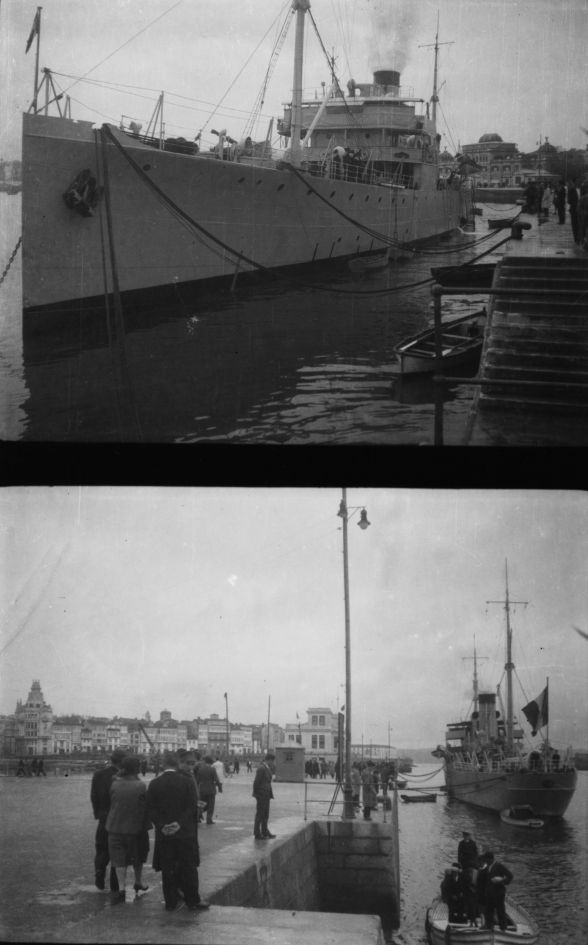
first: the Marqués de Comillas. second: Línea Pinillos advertises the Valbanera to Cuba. She went down off Florida in 1919 with almost 500 emigrants aboard. third: the Tenerife at Ferrol primeira: o Marqués de Comillas. segunda: a Línea Pinillos anuncia o Valbanera cara a Cuba. Afundiuse fronte a Florida en 1919 con case 500 emigrantes a bordo. terceira: o Tenerife en Ferrol
Technology got cheaper; the ticket did not. Prices climbed steeply after the turn of the century, and climbed hardest in the years when most people wanted to go. By 1922 a passage from Galicia cost more than four times what it had in 1880.
A tecnoloxía abaratouse; o billete non. Os prezos subiron con forza a partir do cambio de século, e subiron máis nos anos en que máis xente quería marchar. En 1922 unha pasaxe desde Galiza custaba máis de catro veces o que custaba en 1880.
Price of passage to Havana, in pesetas Prezo da pasaxe á Habana, en pesetas
Hover a bar for the exact figure. Source: A. Vázquez González, Coordenadas de la emigración gallega a América, 1850–1930. Pasa o rato por unha barra para ver a cifra exacta. Fonte: A. Vázquez González, Coordenadas de la emigración gallega a América, 1850–1930.
“In America there is no old whore who goes without, no false penny that doesn't pass.” «En América non hai puta vella que quede sen home nin cadela falsa que non corra.»— Recruiting slogan of the ganchos — Slogan de recrutamento dos ganchos
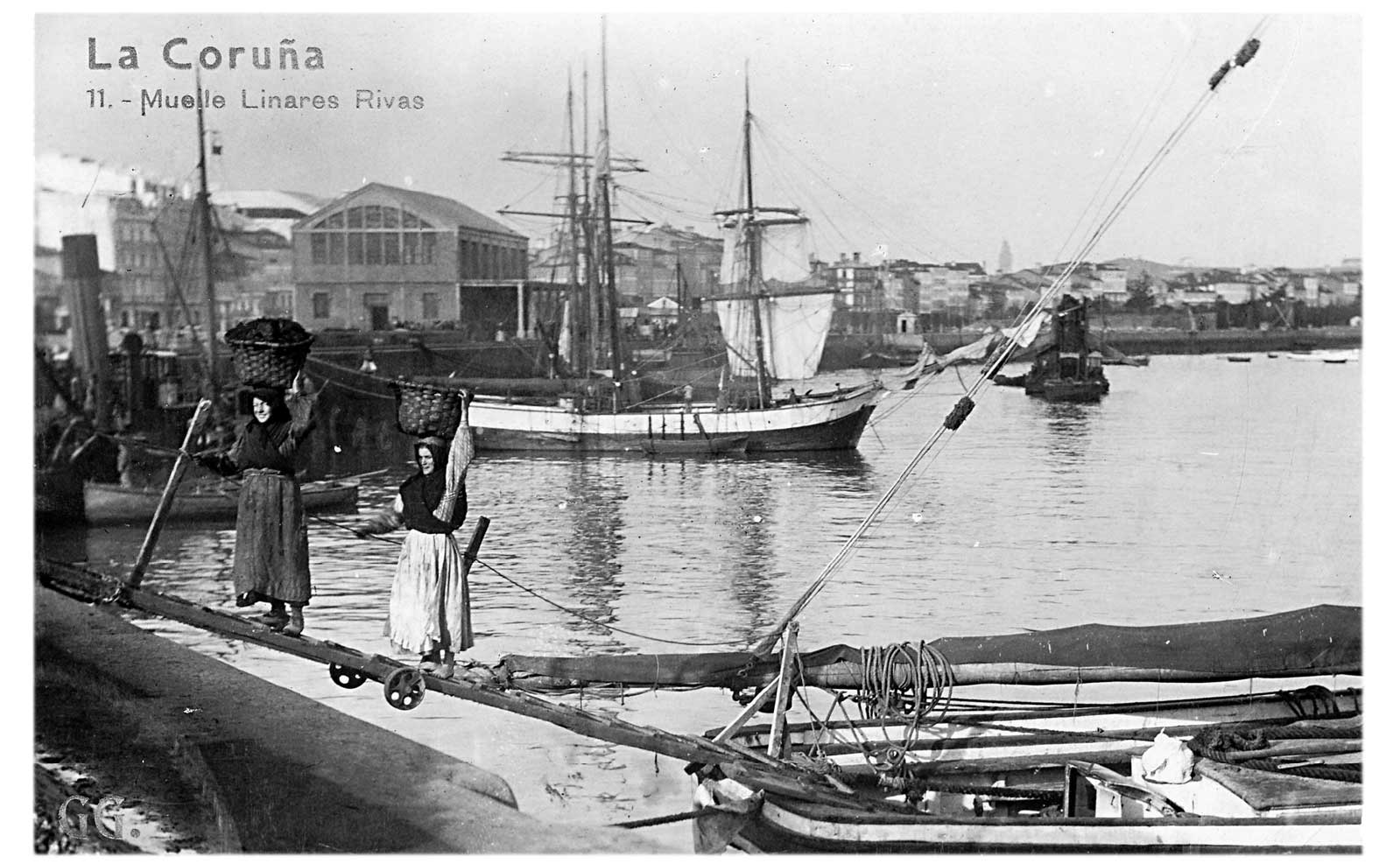
The quays filled and emptied on the sailing schedule. A departure drew the emigrants and their trunks, the agents who had sold them the passage, the families seeing them off, and crowds who came only to watch.
Os peiraos enchíanse e baleirábanse ao ritmo dos horarios de saída. Unha partida xuntaba os emigrantes e os seus baúis, os axentes que lles venderan a pasaxe, as familias que os despedían e multitudes que viñan só para mirar.
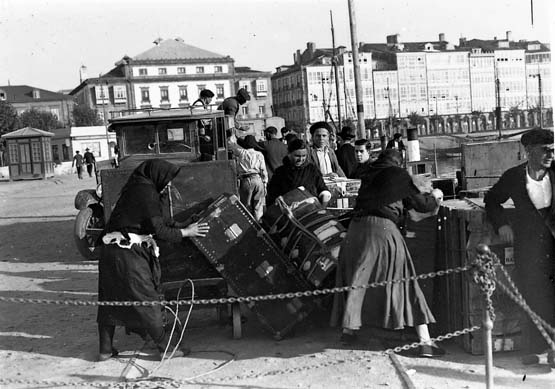
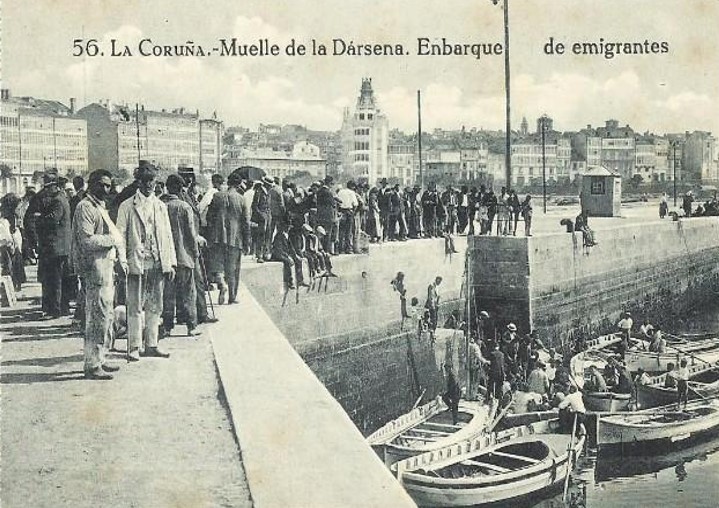
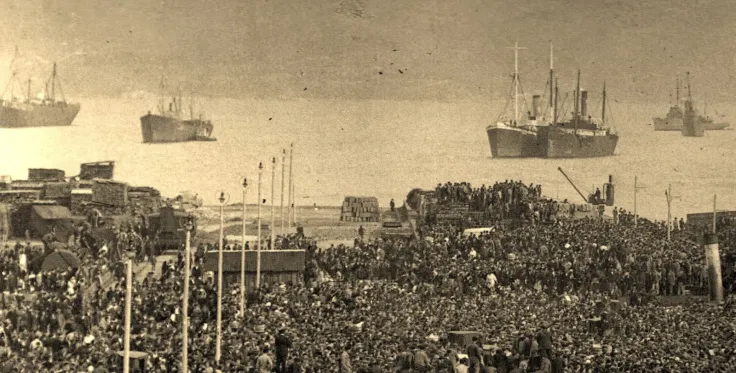
first: emigrants and their trunks on the quay at A Coruña. second: the Muelle de la Dársena, the embarkation dock. third: a crowd on the quayside, steamers waiting at anchor primeira: emigrantes cos seus baúis no peirao da Coruña. segunda: o Muelle de la Dársena, o peirao de embarque. terceira: unha multitude no peirao, cos vapores fondeados
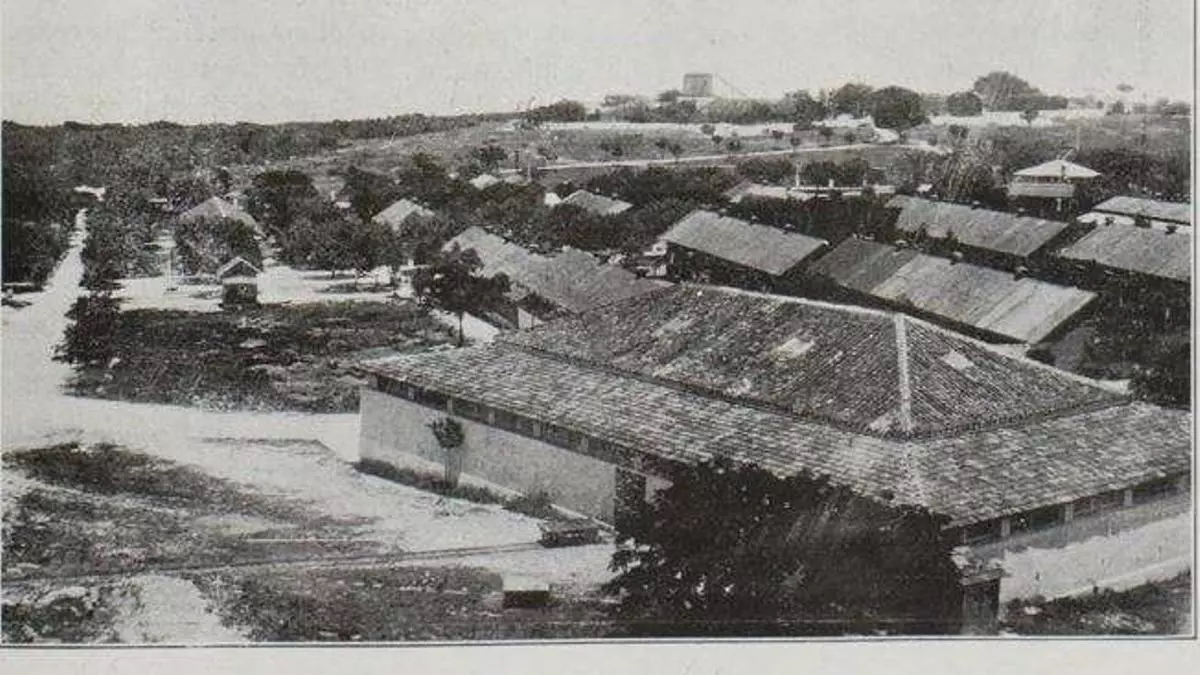
Arrival had its own architecture. Immigrants landing at Havana were held at Triscornia, the quarantine and processing station across the bay, until a relative, a contractor or a mutual-aid society claimed them.
A chegada tiña a súa propia arquitectura. Os inmigrantes que desembarcaban na Habana quedaban retidos en Triscornia, a estación de corentena e tramitación do outro lado da baía, ata que un familiar, un contratista ou unha sociedade de socorros mutuos os reclamase.
Chapter ThreeCapítulo terceiro
Galicia & CubaGaliza e Cuba
The Colonial EraA Época Colonial
Galicians were a small presence in the early Americas. Between 1493 and 1600 they made up only a slim fraction of Spanish emigrants, far behind Andalusia and Extremadura. What changed Galicia's position was not conquest but post.
Os galegos foron unha presenza pequena na América temperá. Entre 1493 e 1600 supuxeron apenas unha fracción dos emigrantes españois, moi por detrás de Andalucía e Estremadura. O que mudou a posición de Galiza non foi a conquista, senón o correo.
In 1764 the crown established the Correos Marítimos, a maritime mail service running from A Coruña to Havana and later extended to Buenos Aires. It was designed to carry letters. It carried passengers and cargo too, and in doing so it made A Coruña a standing Atlantic link between Galicia, Cuba and the Río de la Plata.
En 1764 a coroa estableceu os Correos Marítimos, un servizo de correo marítimo que ía da Coruña á Habana e que despois se estendeu a Buenos Aires. Fora deseñado para levar cartas. Levaba tamén pasaxeiros e mercadorías, e ao facelo converteu A Coruña nunha ligazón atlántica permanente entre Galiza, Cuba e o Río da Prata.
Free trade from 1778 turned the link into a route. Sugar and tobacco came from Havana; silver, hides and tallow from Buenos Aires; textiles, iron, flour and building materials went out from A Coruña.
O libre comercio a partir de 1778 converteu a ligazón nunha ruta. De Habana viñan azucre e tabaco; de Buenos Aires, prata, coiros e sebo; da Coruña saían téxtiles, ferro, fariña e materiais de construción.
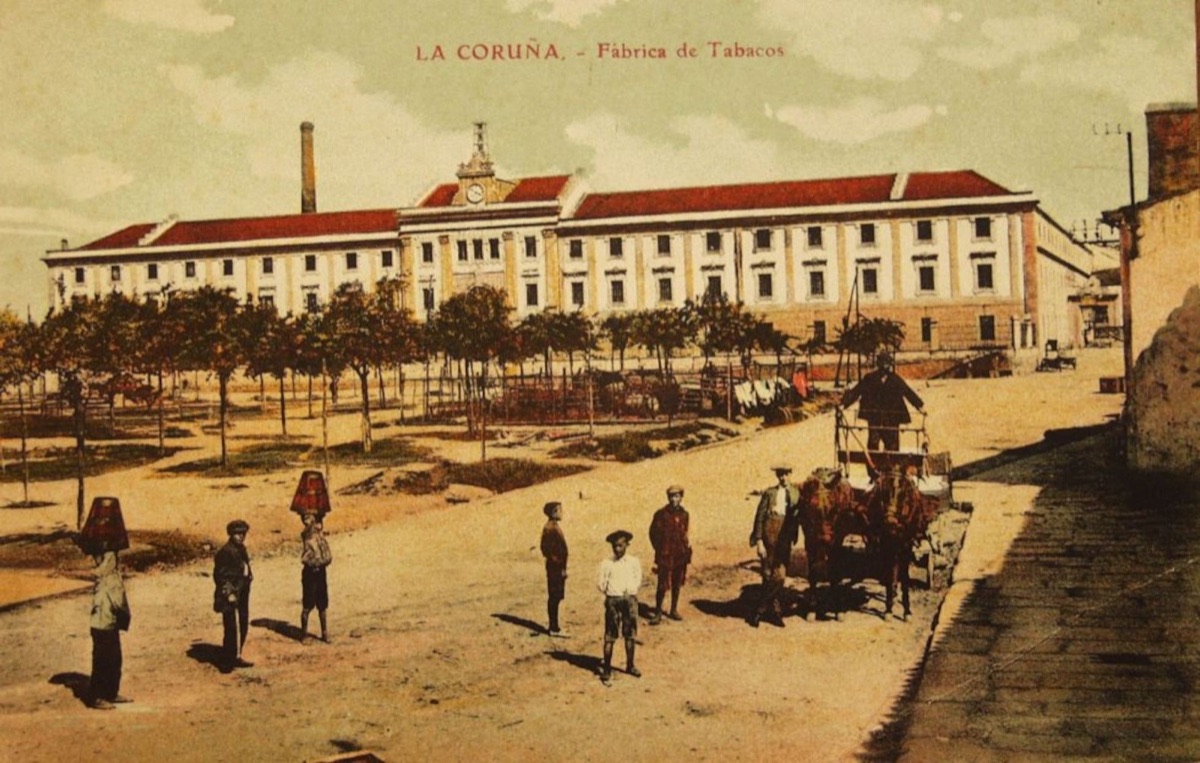
War and colonial upheaval broke that commerce, and many Galician merchant houses could not adapt. Some turned to the exceptional and violent forms of Atlantic profit that remained open: privateering, contraband, and the trafficking of enslaved and indentured people.
A guerra e as convulsións coloniais crebaron ese comercio, e moitas casas mercantís galegas non souberon adaptarse. Algunhas volvéronse cara ás formas excepcionais e violentas de lucro atlántico que seguían abertas: o corso, o contrabando e o tráfico de persoas escravizadas e de traballadores baixo contrato.
Commerce & SlaveryComercio e Escravitude
The profits were extraordinary, and they drew in Galician fidalgos and merchants who were already in the Atlantic trade. This is the part of the story that the emigrant's own memory tends not to carry. Before Galicia sent its poor to Cuba, some of its wealthy sent ships to Africa.
Os beneficios eran extraordinarios, e atraeron fidalgos e comerciantes galegos que xa estaban no tráfico atlántico. Esta é a parte da historia que a memoria do emigrante adoita non levar consigo. Antes de que Galiza enviase os seus pobres a Cuba, algúns dos seus ricos enviaron barcos a África.
Galician slaving voyages, 1816–1820 Expedicións escravistas galegas, 1816–1820
Source: L. Alonso Álvarez, Comercio exterior e atraso económico. Figures rounded to the nearest ten. Fonte: L. Alonso Álvarez, Comercio exterior e atraso económico. Cifras redondeadas á decena máis próxima.
As abolitionist campaigns gathered force the great powers began to prohibit the trade, and the Congress of Vienna attached abolition of the slave trade to its declaration of freedom of navigation in 1815. The traffic did not stop. It went underground, and clandestinity made it expensive. Transport, distribution and bribes all had to be paid for, which raised the price of an enslaved person, which raised the price of sugar. France and Germany responded by substituting beet sugar from their own plantations, and Cuban exports suffered for it.
A medida que as campañas abolicionistas gañaron forza, as grandes potencias comezaron a prohibir o tráfico, e o Congreso de Viena uniu a abolición da trata á súa declaración de liberdade de navegación en 1815. O tráfico non parou. Pasou á clandestinidade, e a clandestinidade encareceuno. Había que pagar transporte, distribución e subornos, o que subía o prezo da persoa escravizada, que á súa vez subía o prezo do azucre. Francia e Alemaña responderon substituíndoo polo azucre de remolacha das súas propias plantacións, e as exportacións cubanas resentíronse.
Enslaved people landed in Cuba, 1821–1852 Persoas escravizadas desembarcadas en Cuba, 1821–1852
Hover a point for the exact figure. Source: L. Alonso Álvarez, as reproduced in Fraga Rodríguez. Figures approximate, rounded to the nearest thousand. Pasa o rato por un punto para ver a cifra exacta. Fonte: L. Alonso Álvarez, reproducido en Fraga Rodríguez. Cifras aproximadas, redondeadas ao milleiro.
Two pressures followed from this: the independence movements, and the gradual replacement of enslaved labor with wage labor drawn from mass emigration. From the middle of the century, Galicia began exporting indentured workers of its own.
Dúas presións seguiron a isto: os movementos independentistas e a substitución gradual do traballo escravo por traballo asalariado procedente da emigración masiva. Desde mediados de século, Galiza comezou a exportar os seus propios traballadores baixo contrato.
The most notorious scheme was run by Urbano Feijoo de Sotomayor, an Ourense businessman with substantial Cuban interests: several sugar mills, a shareholding in the Compañía Transatlántica Española, and influence in both Havana and Madrid. To move Galician labor to Cuba he founded a Compañía Patriótica Mercantil and secured an exclusive privilege to operate it for fifteen years.
O plan máis célebre dirixiuno Urbano Feijoo de Sotomayor, empresario ourensán con intereses considerables en Cuba: varios enxeños azucreiros, participación na Compañía Transatlántica Española e influencia tanto na Habana como en Madrid. Para levar man de obra galega a Cuba fundou unha Compañía Patriótica Mercantil e obtivo o privilexio exclusivo de explotala durante quince anos.
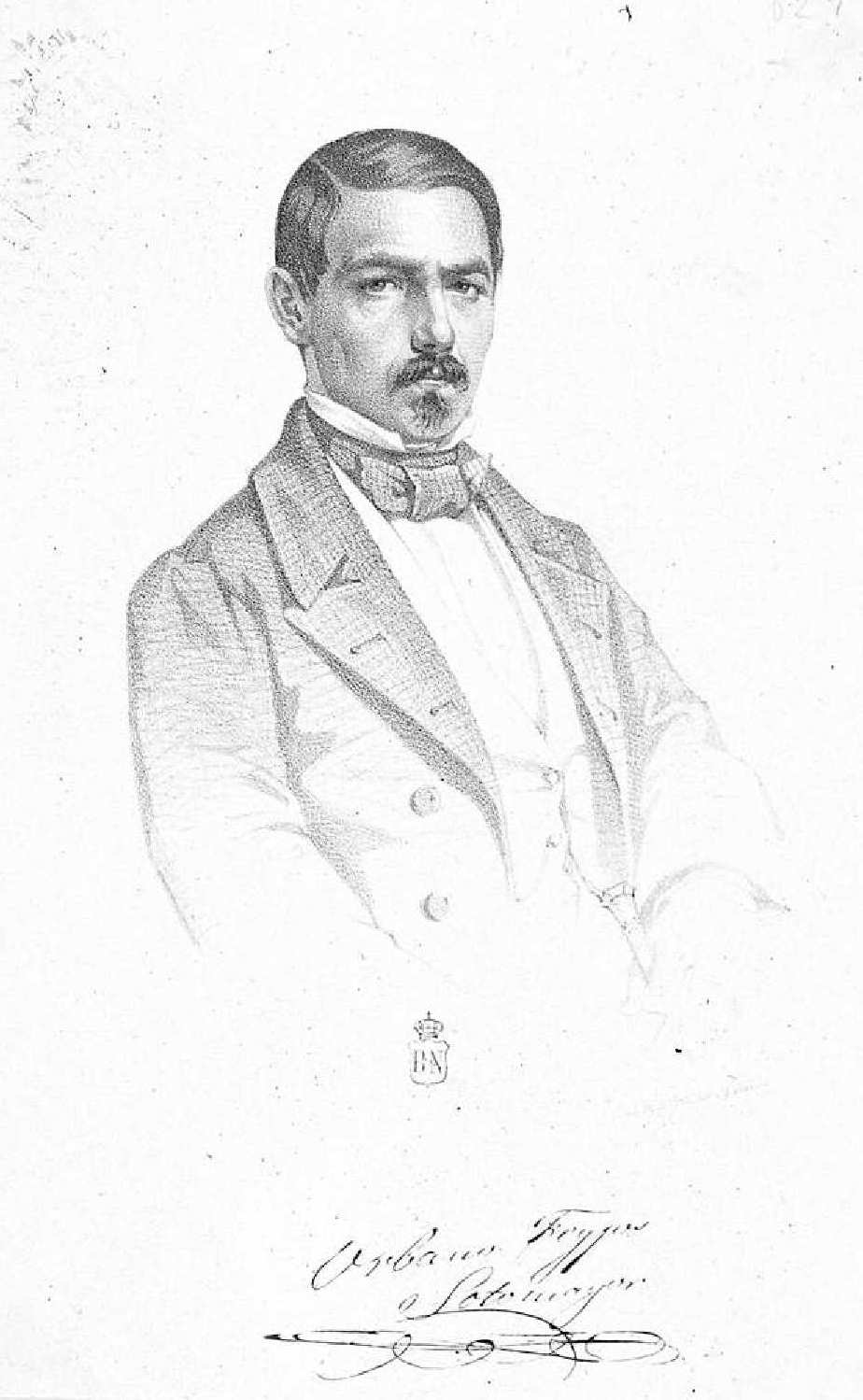
Beneath the appearance of beneficence, Fraga writes, lay an exploitation of Galician emigrants worse than that of enslaved Black people. One clause of the contract makes the case on its own. The worker certifies, in his own voice, that he already knows he is getting less than free day laborers and enslaved people on the island, and accepts in advance that the shortfall is made good by advantages his employer never has to name.
Baixo unha aparencia de beneficencia, escribe Fraga, agochábase unha explotación dos emigrantes galegos peor que a dos escravos negros. Unha soa cláusula do contrato abonda para demostralo. O traballador certifica, coa súa propia voz, que xa sabe que recibe menos que os xornaleiros libres e os escravos da illa, e acepta de antemán que a diferenza queda cuberta por vantaxes que o seu patrón nunca ten que concretar.
“I…, accept the stipulated salary, even though I know and am aware that what free day laborers and the enslaved of the island of Cuba earn is much greater; because I judge this difference compensated by other advantages that my employer will provide me.”
«Eu…, conformo-me co salário estipulado, ainda que sei e consta-me que é moito maior o que gañan os xornaleiros libres e os escravos da illa de Cuba; porque esta diferenza xulgo-a compensada con outras vantaxes que me proporcionará o meu patrón.»
—Clause of the colonos’ contract, quoted in Fraga Rodríguez, p. 25 —Cláusula do contrato dos colonos, citada en Fraga Rodríguez, p. 25
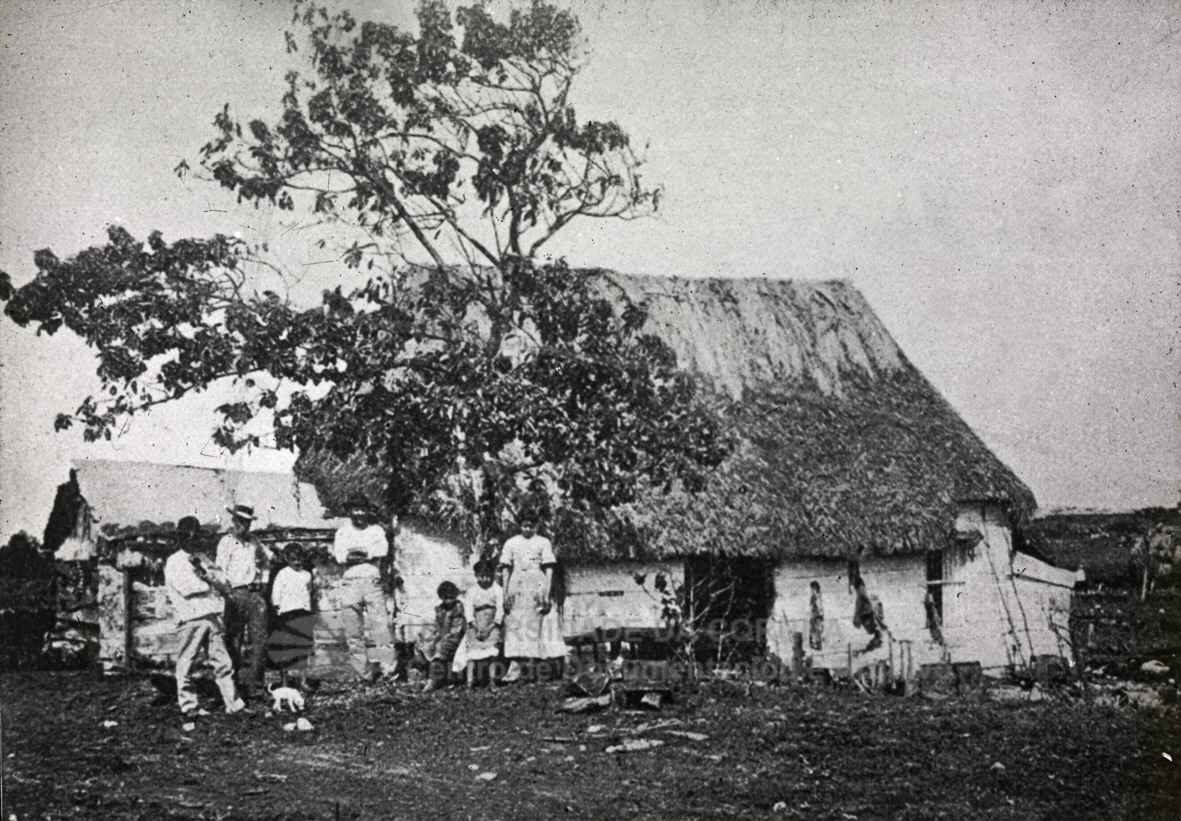
What the work amounted to was railway construction at Cienfuegos and Trinidad, coffee plantations and sugar mills, under conditions that killed. Men died of sanitary, hygienic and dietary neglect; others fled and were hunted as cimarróns, the word used for people who escaped slavery. When the scale of it became public, the denunciations reached the Spanish parliament, a commission was appointed, and it ended in the moral condemnation of Feijoo and a decree freeing the Galician workers, helped along, it should be said, by Cuban landowners who had their own interest in replacing them with indentured Chinese labor.
O traballo reducíase á construción dos ferrocarrís de Cienfuegos e Trinidad, aos cafetais e aos enxeños azucreiros, en condicións que mataban. Houbo homes que morreron por abandono sanitario, hixiénico e alimentario; outros fuxiron e foron perseguidos como cimarróns, a palabra que se usaba para quen escapaba da escravitude. Cando se soubo a magnitude do caso, as denuncias chegaron ao parlamento español, nomeouse unha comisión, e todo rematou coa condena moral de Feijoo e cun decreto que liberaba os traballadores galegos, axudado, hai que dicilo, polos propietarios cubanos que tiñan o seu propio interese en substituílos por man de obra chinesa contratada.
The Modern EraA Época Contemporánea
Emigration paused during the Ten Years' War, Cuba's first sustained war of independence, and resumed as Spain wound down slavery on the island. The Ley de Patronato of 1880 began the process, and abolition was completed in 1886.
A emigración detívose durante a Guerra dos Dez Anos, a primeira guerra de independencia sostida de Cuba, e retomouse a medida que España desmantelaba a escravitude na illa. A Lei de Patronato de 1880 iniciou o proceso e a abolición completouse en 1886.
Independence, when it came, did not slow the traffic. It accelerated it. The war of 1898, the United States military occupation of 1898–1902, and the founding of the Cuban Republic in 1902 together confirmed Havana as the principal port of entry to the Americas, and Galician arrivals reached their highest levels after it.
A independencia, cando chegou, non freou o tráfico. Acelerouno. A guerra de 1898, a ocupación militar estadounidense de 1898–1902 e a fundación da República de Cuba en 1902 confirmaron xuntas a Habana como principal porto de entrada ás Américas, e as chegadas galegas acadaron os seus niveis máis altos despois diso.
The Treaty of Paris of 1898, signed for Spain by the Galician Eugenio Montero Ríos, let Spanish residents on the island keep their nationality, property and estates. For Galicians already in Cuba that meant dual protection at exactly the moment the island was being remade.
O Tratado de París de 1898, asinado por España polo galego Eugenio Montero Ríos, permitiu aos residentes españois na illa conservar a súa nacionalidade, as súas propiedades e o seu patrimonio. Para os galegos xa establecidos en Cuba iso significou dupla protección xusto no momento en que a illa se estaba a refacer.
By 1900 Galicians were the largest regional group among Spanish nationals in Cuba, 19,088 people, 28.6 per cent of all Spaniards on the island, ahead of Asturias and the Canaries. They were also the most heavily male and the most heavily unmarried of any group in the table, the signature of a migration of young men sent out to earn.
En 1900 os galegos eran o maior grupo rexional entre os nacionais españois en Cuba, 19.088 persoas, o 28,6 % de todos os españois da illa, por diante de Asturias e das Canarias. Eran tamén o grupo máis masculinizado e máis solteiro de toda a táboa, a sinatura dunha migración de homes novos enviados a gañar.
Origin of Spanish nationals resident in Cuba, 1900 Orixe dos nacionais españois residentes en Cuba, 1900
| RegionRexión | TotalTotal | % | Men %Homes % | Illiterate %Analfabetos % | Single %Solteiros % |
|---|---|---|---|---|---|
| GaliciaGaliza | 19,088 | 28.56 | 98.22 | 23 | 71 |
| Asturias | 15,853 | 23.72 | 98.22 | 4 | 68 |
| Canary IslandsIllas Canarias | 10,509 | 15.72 | 95.42 | 63 | 54 |
| CastileCastela | 6,351 | 9.43 | 95.63 | 9.5 | 62 |
| CataloniaCataluña | 3,563 | 5.33 | 97.60 | 11 | 59 |
| AndalusiaAndalucía | 3,185 | 4.76 | 91.14 | 30 | 55 |
| LeónLeón | 2,225 | 3.57 | 97.20 | 14 | 66 |
| Basque CountryPaís Vasco | 1,760 | 2.63 | 96.53 | 8 | 60 |
| ValenciaValencia | 1,047 | 1.56 | 97.51 | 3 | 60 |
| Balearic IslandsIllas Baleares | 869 | 1.32 | 98.41 | 35 | 49 |
| AragonAragón | 780 | 1.16 | 95.89 | 25 | 62 |
| NavarreNavarra | 754 | 1.12 | 94.42 | 17 | 70 |
| Murcia | 419 | 0.62 | 97.20 | 31 | 61 |
| Extremadura | 384 | 0.50 | 98.43 | 22 | 59 |
Percentages are of Spanish nationals in Cuba, not of Cuba's population. Counts cover only those who retained Spanish citizenship, so Cubans of Galician descent are not included. Source: Fe Iglesias, “Características de la inmigración española en Cuba, 1904–1930”. As porcentaxes son sobre os nacionais españois en Cuba, non sobre a poboación de Cuba. As cifras recollen só quen conservou a cidadanía española, polo que non inclúen os cubanos de ascendencia galega. Fonte: Fe Iglesias, «Características de la inmigración española en Cuba, 1904–1930».
Reconstruction and heavy American investment carried a dependent, neocolonial boom from 1900 to 1920. Then sugar fell from twenty-three cents a pound in 1920 to three cents in 1921. Wages fell with it, unemployment followed, and in 1933 the government began forcibly repatriating foreigners without work or means. That same year the Ley de Nacionalización del Trabajo obliged every company to reserve at least half its jobs for Cuban workers. For a community built on shop counters and sugar mills, it was the end of an era.
A reconstrución e o forte investimento estadounidense sostiveron un auxe dependente e neocolonial entre 1900 e 1920. Despois o azucre caeu de vinte e tres centavos a libra en 1920 a tres en 1921. Os salarios caeron con el, chegou o desemprego, e en 1933 o goberno comezou a repatriar á forza os estranxeiros sen traballo nin recursos. Ese mesmo ano a Lei de Nacionalización do Traballo obrigou todas as empresas a reservar polo menos a metade dos seus postos para traballadores cubanos. Para unha comunidade construída sobre mostradores e enxeños, foi a fin dunha época.
Chapter FourCapítulo cuarto
Life in CubaA Vida en Cuba
A Nation Built in ExileUnha Nación Construída no Exilio
Galicia's cultural institutions were not, for the most part, founded in Galicia. They were founded in Havana, by emigrants, and sent home.
As institucións culturais de Galiza non se fundaron, na súa maioría, en Galiza. Fundáronse na Habana, por emigrantes, e enviáronse á casa.
The Galician press in Cuba ran to seventy-one publications, most of them bilingual. El Eco de Galicia, founded on 8 March 1878, was the dean of the Galician press anywhere in the Americas. A Gaita Gallega, seven years later, was the first newspaper written entirely in Galician published anywhere in the world.
A prensa galega en Cuba chegou a setenta e unha cabeceiras, a maioría bilingües. El Eco de Galicia, fundado o 8 de marzo de 1878, foi o decano da prensa galega en toda América. A Gaita Gallega, sete anos despois, foi o primeiro xornal escrito integramente en galego publicado en calquera lugar do mundo.
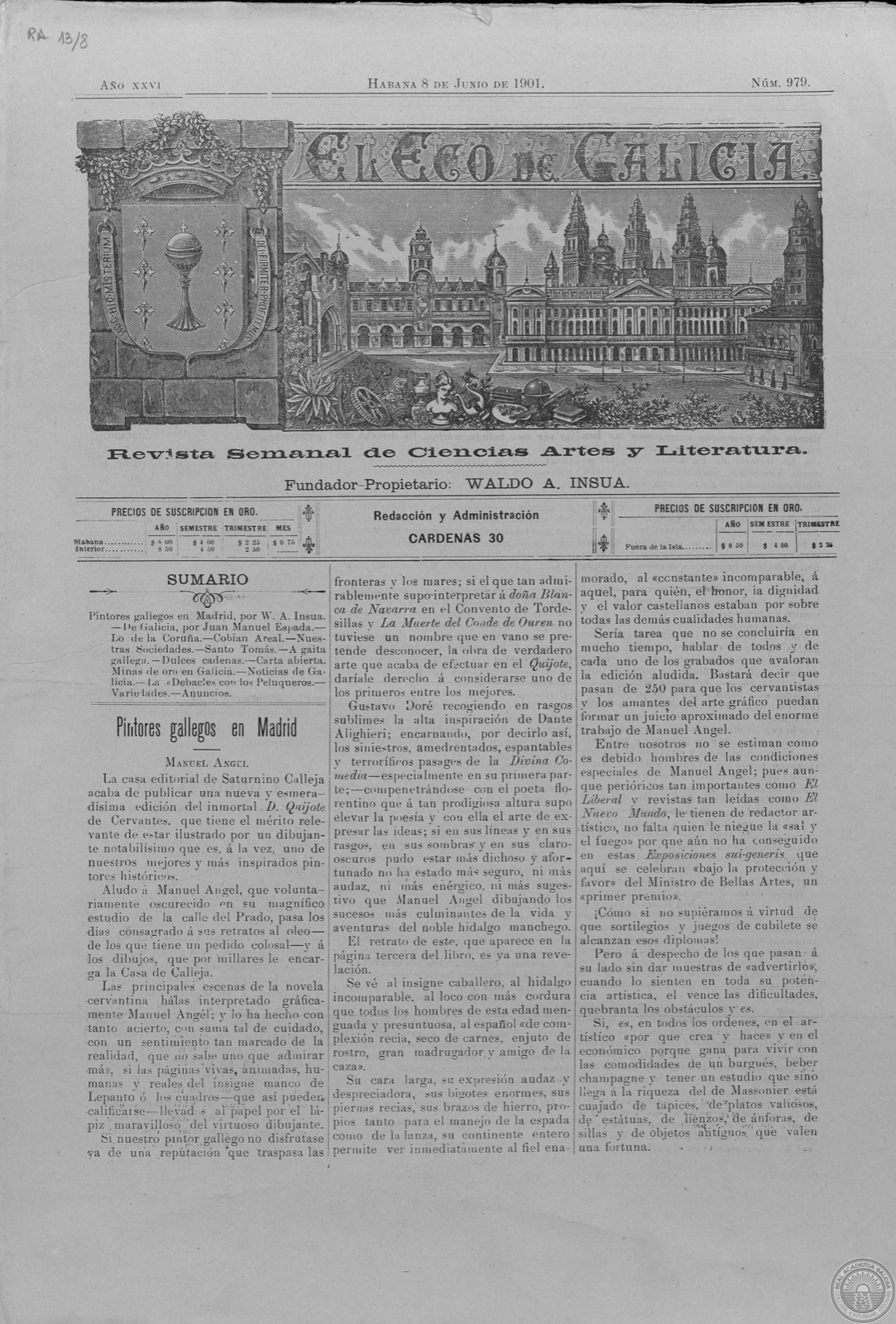
In June 1905 Manuel Curros Enríquez and Xosé Fontenla Leal, a poet and a typesetter, both living in Havana, constituted the Asociación Iniciadora y Protectora de la Academia Gallega. Within three months the Academy itself was established in A Coruña; it was reconstituted as the Real Academia Galega the following year, with Manuel Murguía as its first president. The association went on funding it from Cuba for decades, with branches in Cienfuegos, Santa Clara, Guantánamo and Bayamo.
En xuño de 1905 Manuel Curros Enríquez e Xosé Fontenla Leal, un poeta e un tipógrafo, ambos residentes na Habana, constituíron a Asociación Iniciadora y Protectora de la Academia Gallega. En tres meses a Academia quedaba establecida na Coruña; reconstituíuse como Real Academia Galega ao ano seguinte, con Manuel Murguía como primeiro presidente. A asociación seguiu financiándoa desde Cuba durante décadas, con delegacións en Cienfuegos, Santa Clara, Guantánamo e Bayamo.
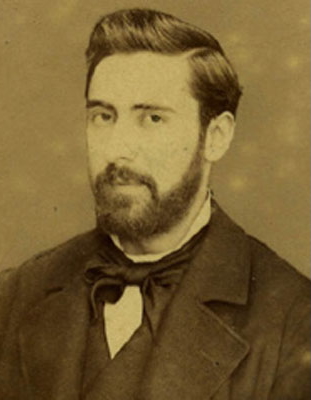
“I will never forget that it was you who decided my literary vocation and my marriage to the mother tongue.” «Nunca esquecerei que foches ti quen decidiu a miña vocación literaria e o meu casamento coa lingua nai.»— Ramón Cabanillas, on Fontenla Leal — Ramón Cabanillas, sobre Fontenla Leal
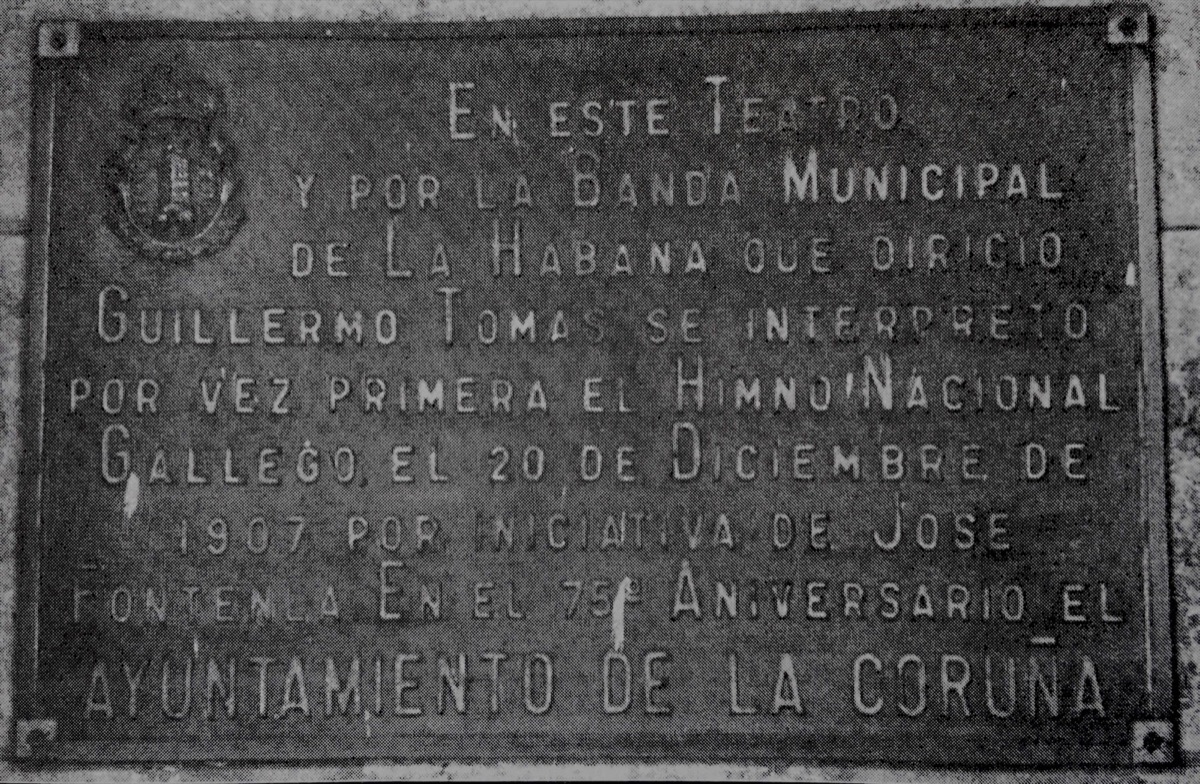
On 20 December 1907 the Galician anthem, Os Pinos, was performed in public for the first time. Not in Santiago, not in A Coruña, but at the Teatro Tacón in Havana, by the city's Municipal Band under Guillermo Tomás, at Fontenla Leal's initiative. A Coruña acknowledged the debt seventy-five years later with a plaque on the theater wall.
O 20 de decembro de 1907 o himno galego, Os Pinos, interpretouse en público por primeira vez. Non en Santiago, non na Coruña, senón no Teatro Tacón da Habana, pola Banda Municipal da cidade dirixida por Guillermo Tomás, por iniciativa de Fontenla Leal. A Coruña recoñeceu a débeda setenta e cinco anos despois cunha placa no muro do teatro.
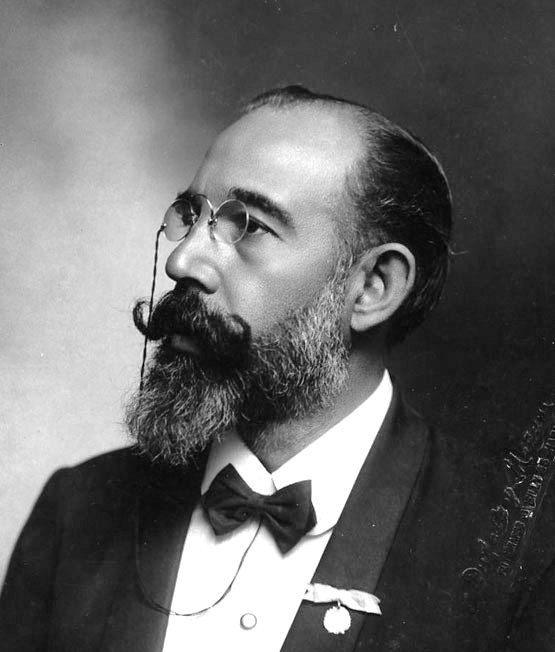
Music traveled with the institutions. The composer and choirmaster Xosé Castro González, known as Chané, spent much of his working life in Havana and set Galician verse to music there, building the choral repertoire that emigrant societies sang.
A música viaxou coas institucións. O compositor e director de coros Xosé Castro González, coñecido como Chané, pasou boa parte da súa vida activa na Habana e alí puxo música a versos galegos, construíndo o repertorio coral que cantaban as sociedades de emigrantes.
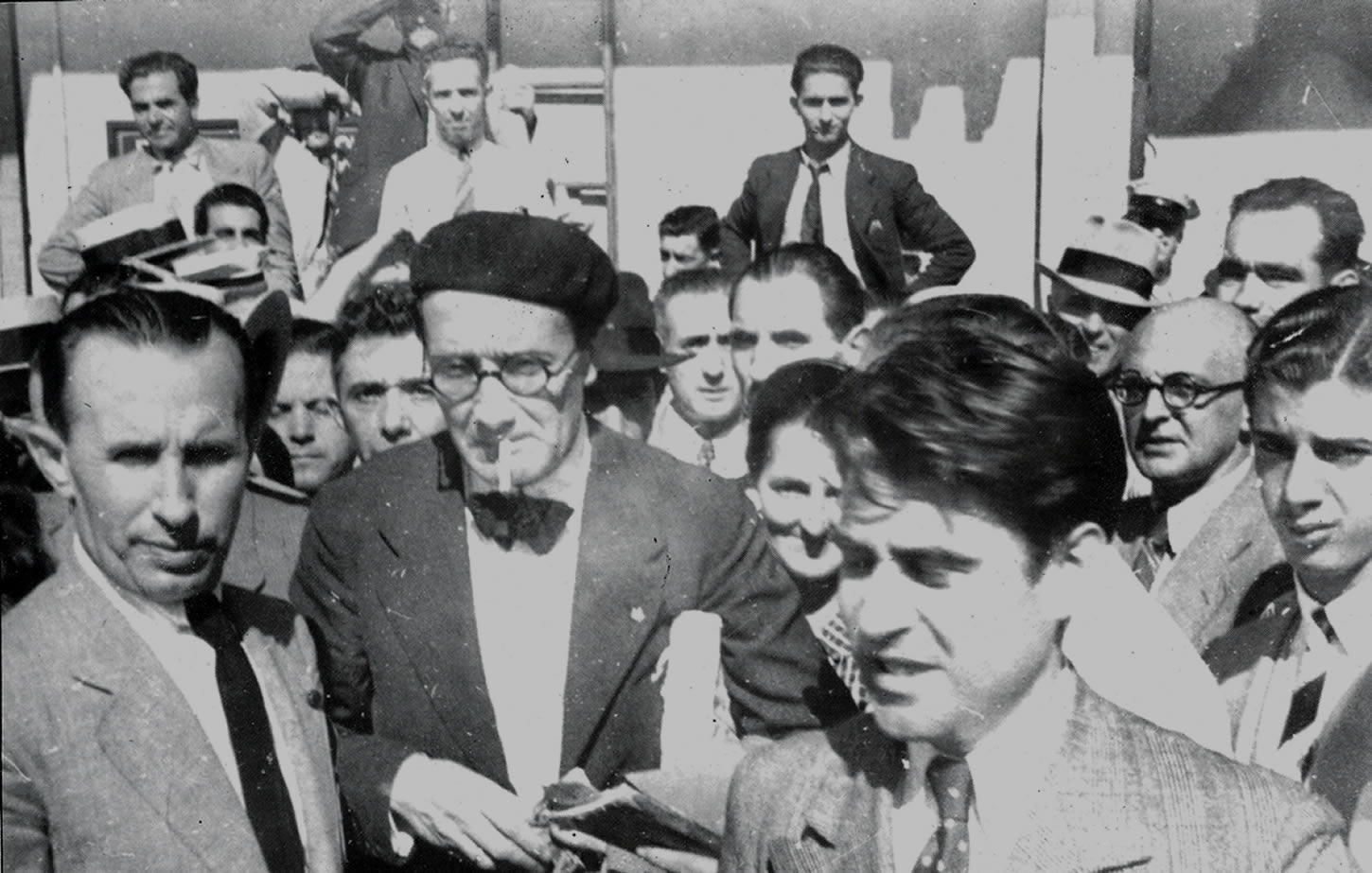
Because the community was large, organized and solvent, it also became worth fighting over. During the Spanish Civil War the Centro Galego turned into a political battleground, with Republican and Nationalist factions competing for the allegiance and the funds of the diaspora. Castelao arrived in 1938 to argue the Republican case in person.
Por ser unha comunidade grande, organizada e solvente, tamén se converteu en algo polo que pagaba a pena pelexar. Durante a Guerra Civil española o Centro Galego converteuse nun campo de batalla político, con faccións republicanas e nacionalistas disputando a lealdade e os fondos da diáspora. Castelao chegou en 1938 para defender en persoa a causa republicana.
Chapter FiveCapítulo quinto
What They BuiltO Que Construíron
Making a LivingGañar a Vida
By the early twentieth century Galician ownership reached into nearly every sector of the Cuban economy: copper and nickel mines, coffee plantations, charcoal, tobacco growing and manufacture, railways, ports, sugar mills.
A comezos do século XX a propiedade galega chegaba a case todos os sectores da economía cubana: minas de cobre e níquel, cafetais, carbón vexetal, cultivo e manufactura do tabaco, ferrocarrís, portos, enxeños azucreiros.
But the characteristic Galician business was smaller and more urban than any of that. It was the grocery and provisions shop, the bodega. A population overwhelmingly rural in origin ended up behind counters in Havana, and the shop became the community's economic ladder and its social center at once.
Pero o negocio galego característico era máis pequeno e máis urbano ca todo iso. Era a tenda de comestibles, a bodega. Unha poboación de orixe abrumadoramente rural acabou detrás dos mostradores da Habana, e a tenda converteuse á vez na escaleira económica da comunidade e no seu centro social.
The other characteristic trade was the sea. Xosé Neira Vilas collected the testimony of these men in Galegos no Golfo de México, and it is one of the few places their voices survive at first hand.
O outro oficio característico foi o mar. Xosé Neira Vilas recolleu o testemuño destes homes en Galegos no Golfo de México, e é un dos poucos lugares onde as súas voces sobreviven en primeira persoa.
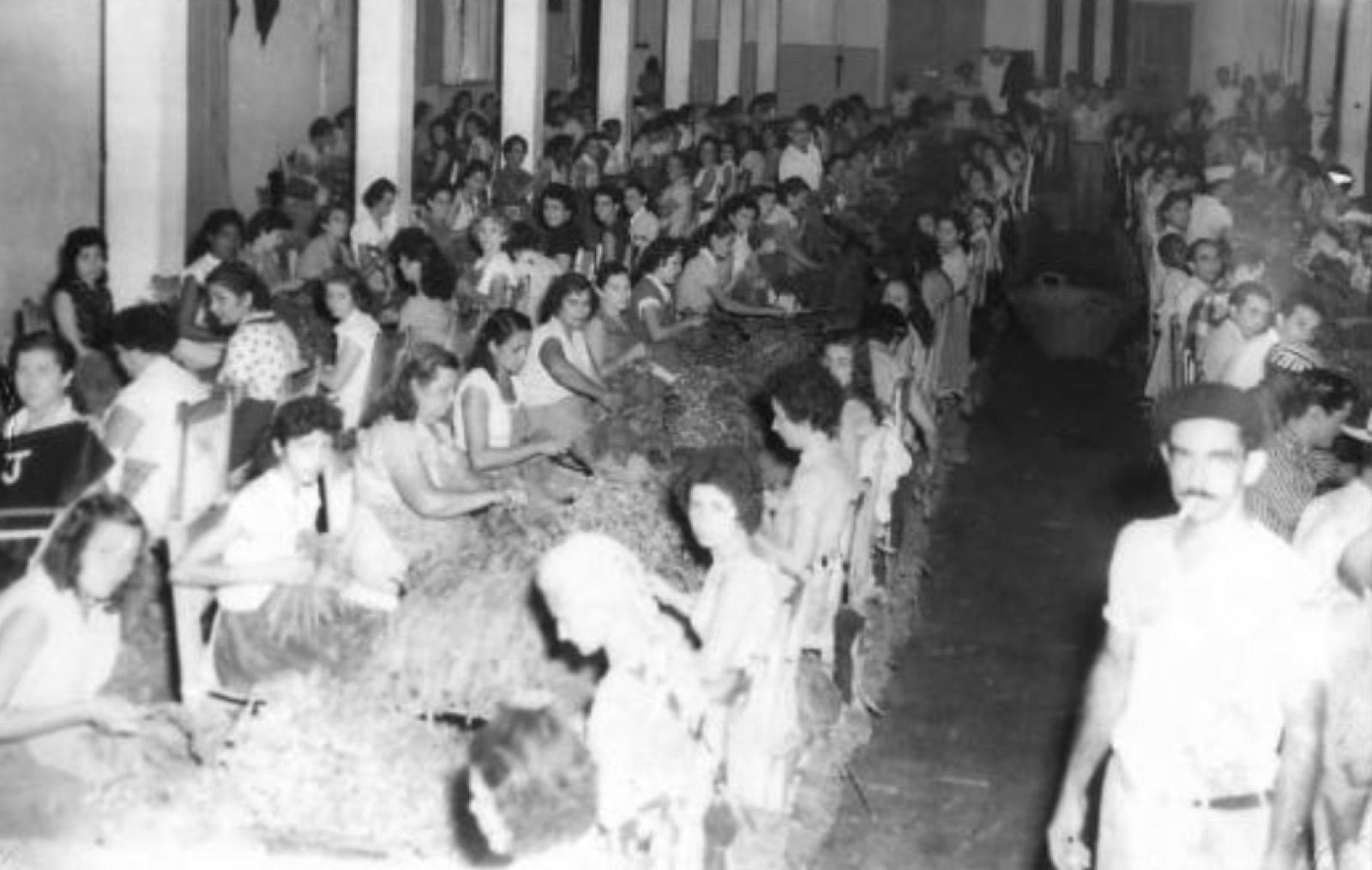
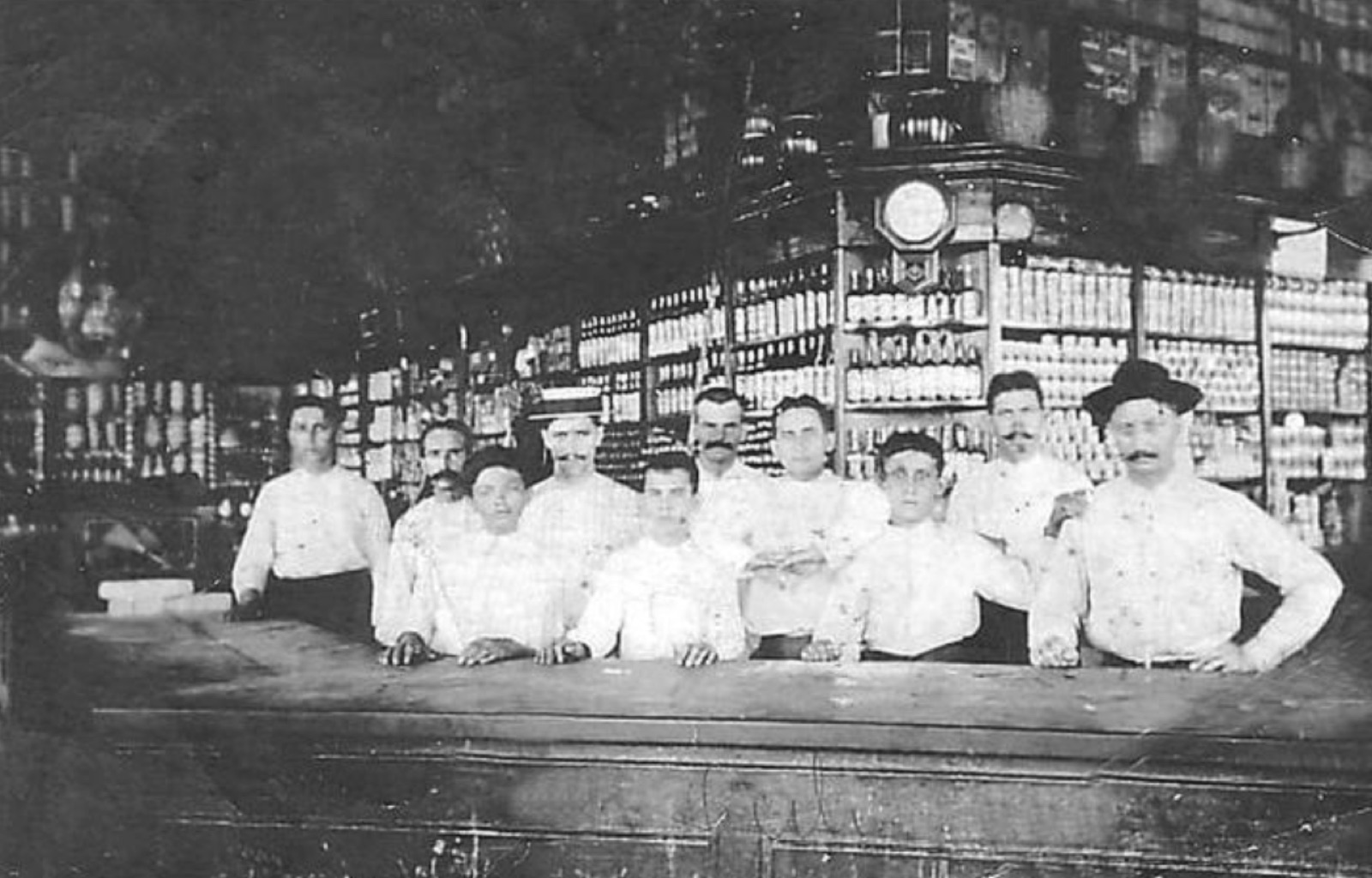
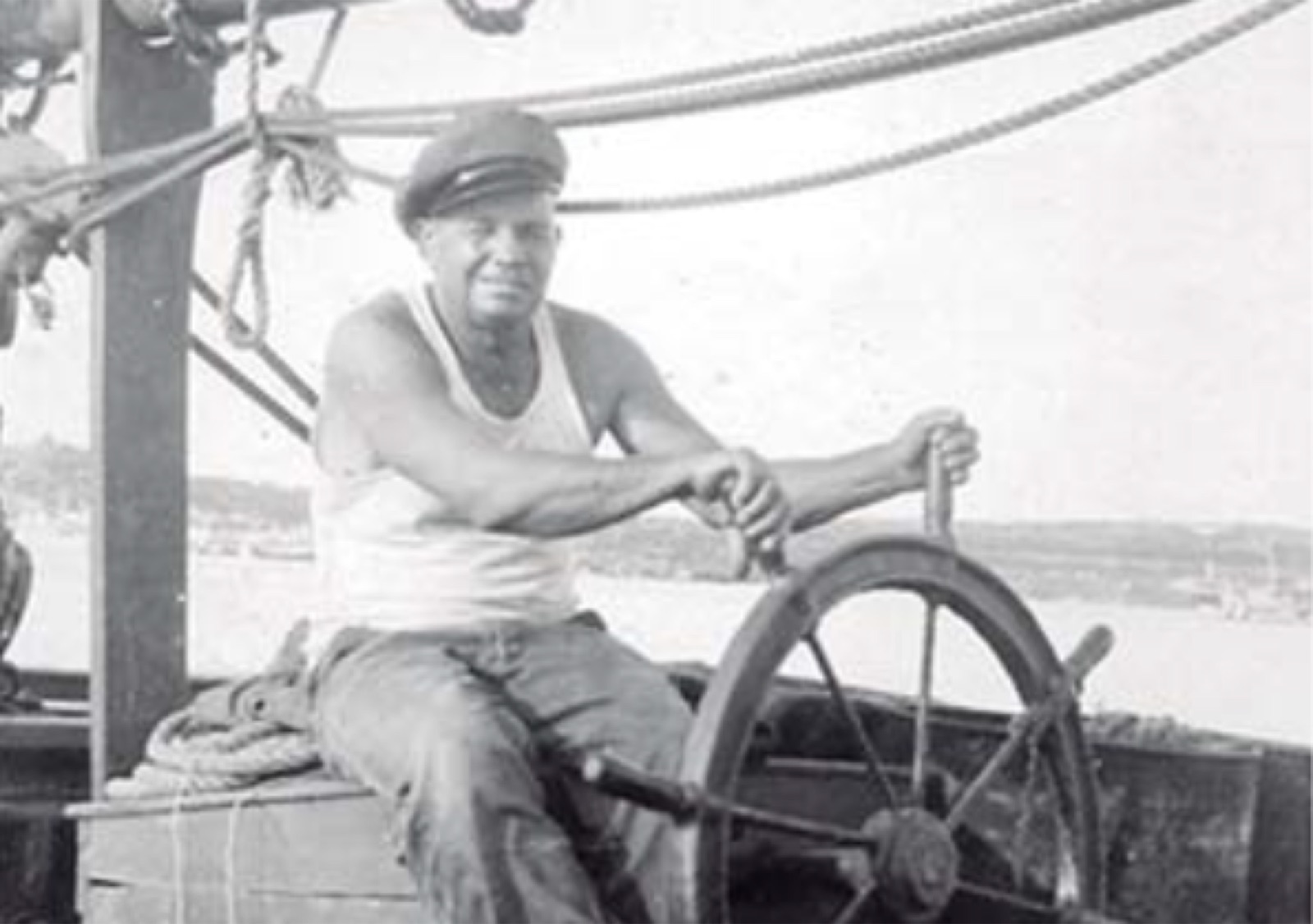
The three Galician trades in Cuba: tobacco, the counter, the sea Os tres oficios galegos en Cuba: o tabaco, o mostrador, o mar
A few went much further. Antonio Villaamil owned the Flor del Puro Habano factory; Florentino Valdés ran Bien Público, Pedro Muruais La Meridiana. In banking, García Barbón and José López Rodríguez made fortunes. López Rodríguez, from Maside in Ourense and universally known as el Pote, came to control several banks and sugar mills, founded La Moderna Poesía, the largest bookshop in Cuba, and financed José Miguel Gómez into the presidency of the Republic in the 1908 elections. The jeweler Manuel Hierro, friend of Curros Enríquez, belongs on the same list; his granddaughter Lilia Esteban married Alejo Carpentier.
Uns poucos chegaron moito máis lonxe. Antonio Villaamil era dono da fábrica Flor del Puro Habano; Florentino Valdés levaba Bien Público, e Pedro Muruais La Meridiana. Na banca, García Barbón e José López Rodríguez fixeron fortuna. López Rodríguez, de Maside en Ourense e coñecido por todos como el Pote, chegou a controlar varios bancos e enxeños, fundou La Moderna Poesía, a maior libraría de Cuba, e financiou a José Miguel Gómez ata a presidencia da República nas eleccións de 1908. O xoieiro Manuel Hierro, amigo de Curros Enríquez, pertence á mesma lista; a súa neta Lilia Esteban casou con Alejo Carpentier.
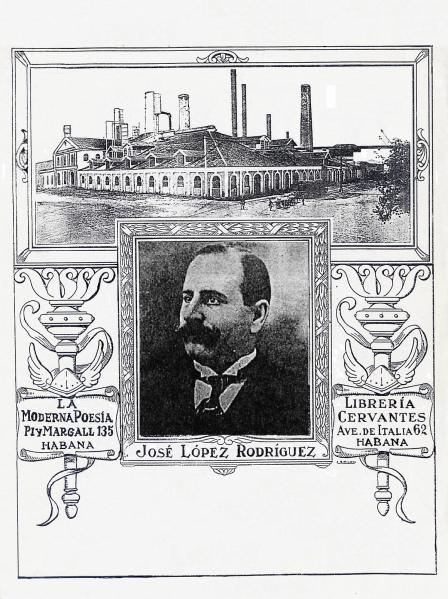
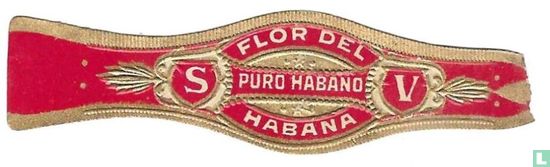
left: José López Rodríguez, el Pote, with La Moderna Poesía and the Librería Cervantes. right: a band from the Flor del Puro Habano esquerda: José López Rodríguez, el Pote, con La Moderna Poesía e a Librería Cervantes. dereita: unha vitola da Flor del Puro Habano
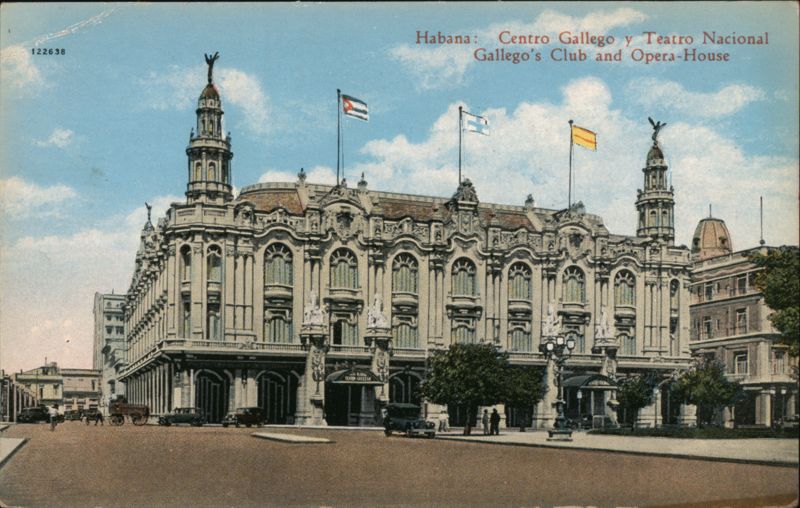
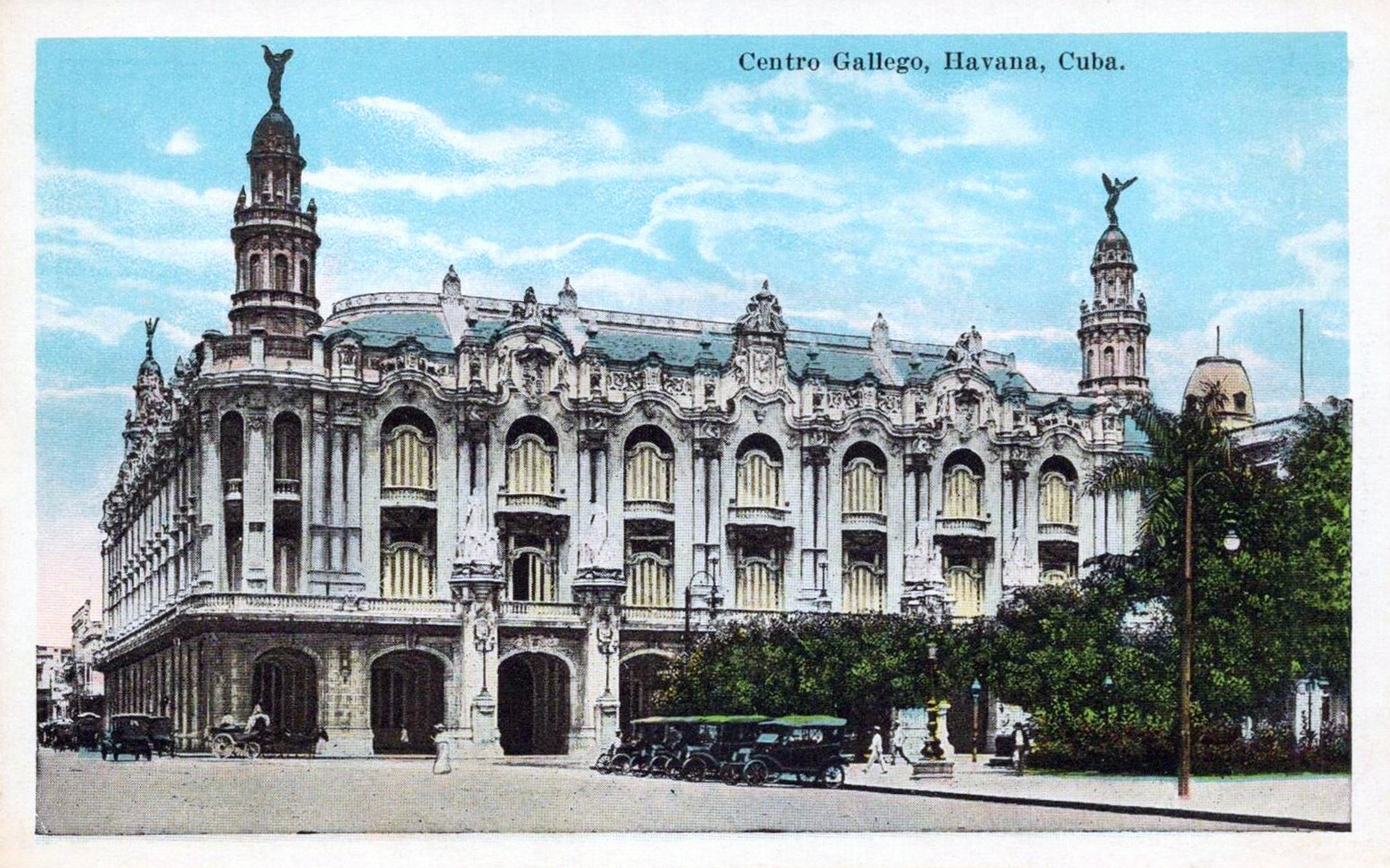
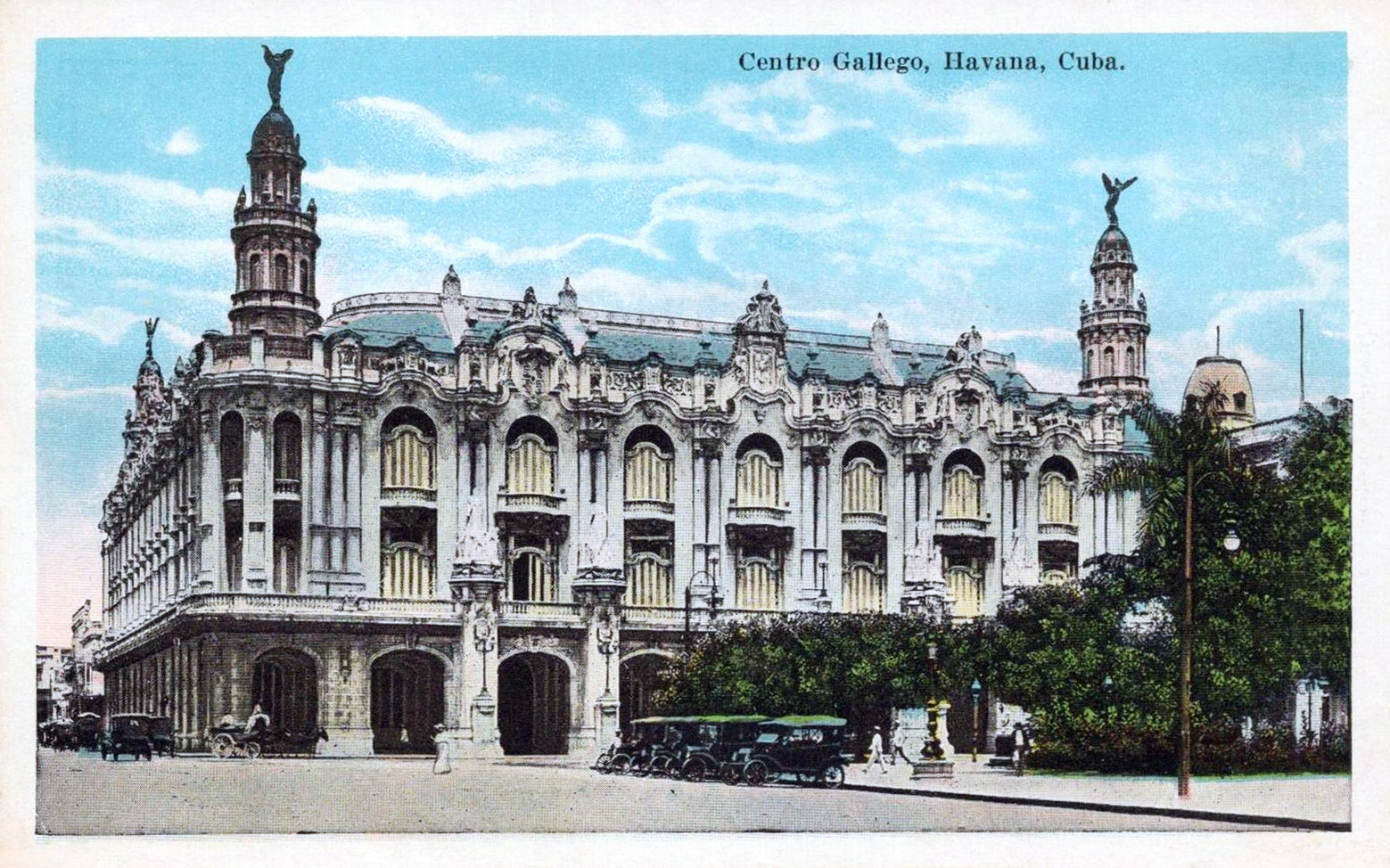
Centro Gallego de La Habana Centro Galego da Habana
It began as an article. In October 1879, from the pages of El Eco de Galicia, Waldo Álvarez Insua called for a Galician institution in Havana. The founding assembly met that November, at the Teatro Tacón.
Comezou como un artigo. En outubro de 1879, desde as páxinas de El Eco de Galicia, Waldo Álvarez Insua chamou a crear unha institución galega na Habana. A asemblea fundacional reuniuse aquel novembro, no Teatro Tacón.
It became a meeting place, a mutual-aid society and a health service, and then a school system, with a library and adult classes. Enrique Líster and the painter Laxeiro were among those who studied there.
Converteuse en lugar de encontro, sociedade de socorros mutuos e servizo de saúde, e despois nun sistema educativo, con biblioteca e clases para adultos. Enrique Líster e o pintor Laxeiro estiveron entre quen alí estudou.
By 1920 it had 64,000 members and delegations across the island. It bought its own savings bank, its own sanatorium, La Benéfica, and the Teatro Tacón itself, the hall where it had been founded forty years earlier.
En 1920 tiña 64.000 socios e delegacións por toda a illa. Mercou a súa propia caixa de aforros, o seu propio sanatorio, La Benéfica, e o mesmísimo Teatro Tacón, a sala onde fora fundado corenta anos antes.
Membership was a document you carried. The card below belonged to Ángel Manuel Brea Díaz, twenty-two years old, from Mondoñedo in the province of Lugo, who reached Havana in July 1927 and joined the Centro Gallego two years later.
Ser socio era un documento que se levaba enriba. O carné de abaixo pertenceu a Ánxel Manuel Brea Díaz, de vinte e dous anos, natural de Mondoñedo, provincia de Lugo, que chegou á Habana en xullo de 1927 e ingresou no Centro Galego dous anos despois.
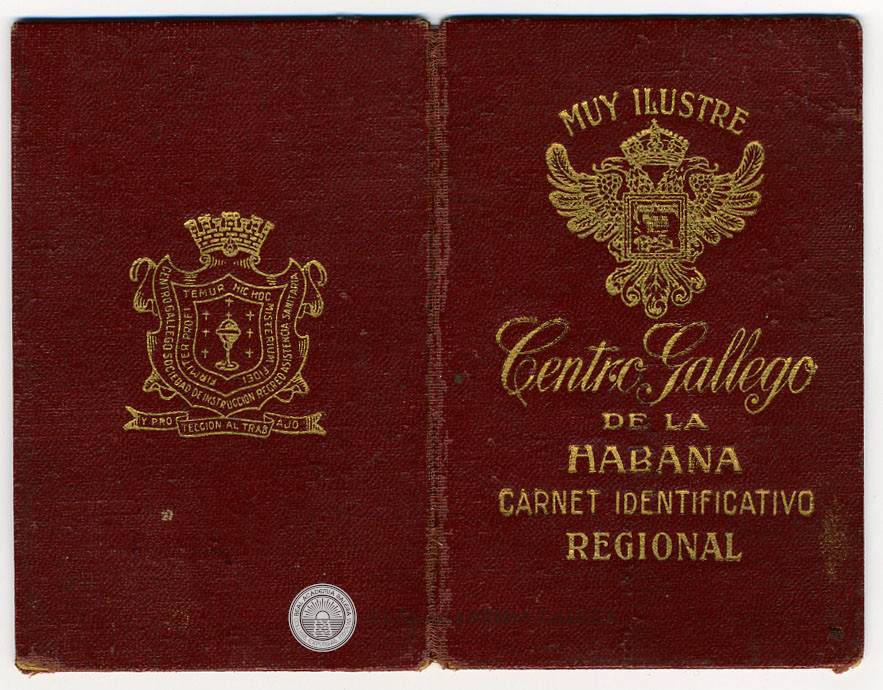
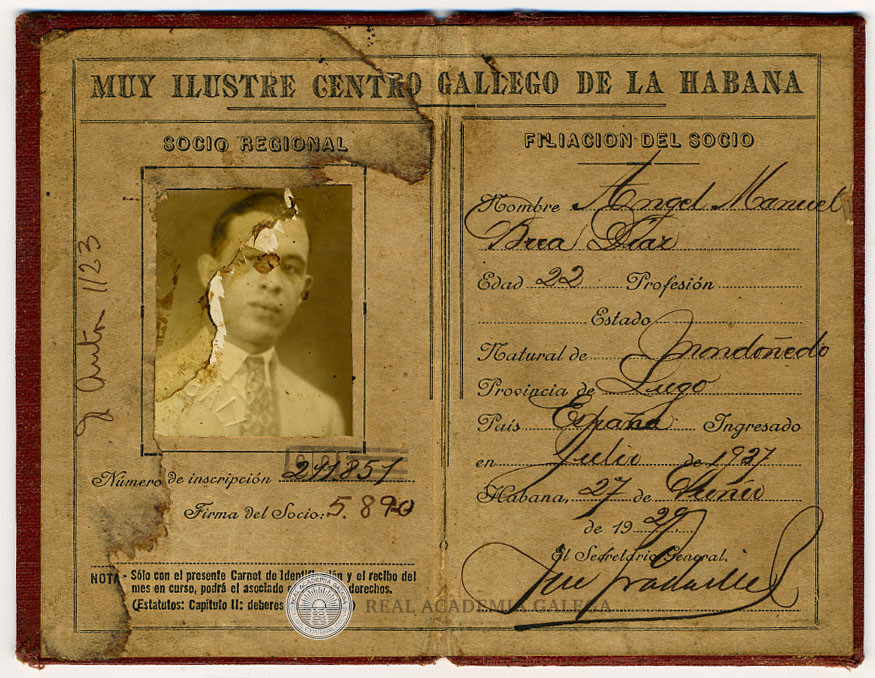
Centro Gallego de La Habana, carnet identificativo regional, issued 1929 Centro Galego da Habana, carné identificativo rexional, expedido en 1929
The Centro's weight made control of it worth contesting, and Cuban politicians treated it as a power to keep on side. Tomás Estrada Palma, the first president of independent Cuba, called at the Centro on the day of his inauguration.
O peso do Centro fixo que pagase a pena disputar o seu control, e os políticos cubanos tratárono como un poder que convén ter a favor. Tomás Estrada Palma, primeiro presidente da Cuba independente, visitou o Centro o mesmo día da súa toma de posesión.
It was not the only such body, and it was not open to everyone. The Centro Gallego covered men. In 1912 a group of women founded Solidaridad Pontevedresa to do for Galician women what it would not; in January 1917 they reconstituted it as Hijas de Galicia, a mutual health society that by 1924 had built its own hospital, with particular attention to the women most exposed to trafficking and exploitation. Other societies followed, among them the Naturales de Ortigueira in 1928.
Non era o único organismo deste tipo, e non estaba aberto a todos. O Centro Galego cubría os homes. En 1912 un grupo de mulleres fundou Solidaridad Pontevedresa para facer polas galegas o que aquel non facía; en xaneiro de 1917 reconstituírona como Hijas de Galicia, sociedade mutua de saúde que en 1924 xa construíra o seu propio hospital, con atención particular ás mulleres máis expostas ao tráfico e á explotación. Seguíronlle outras sociedades, entre elas os Naturales de Ortigueira en 1928.
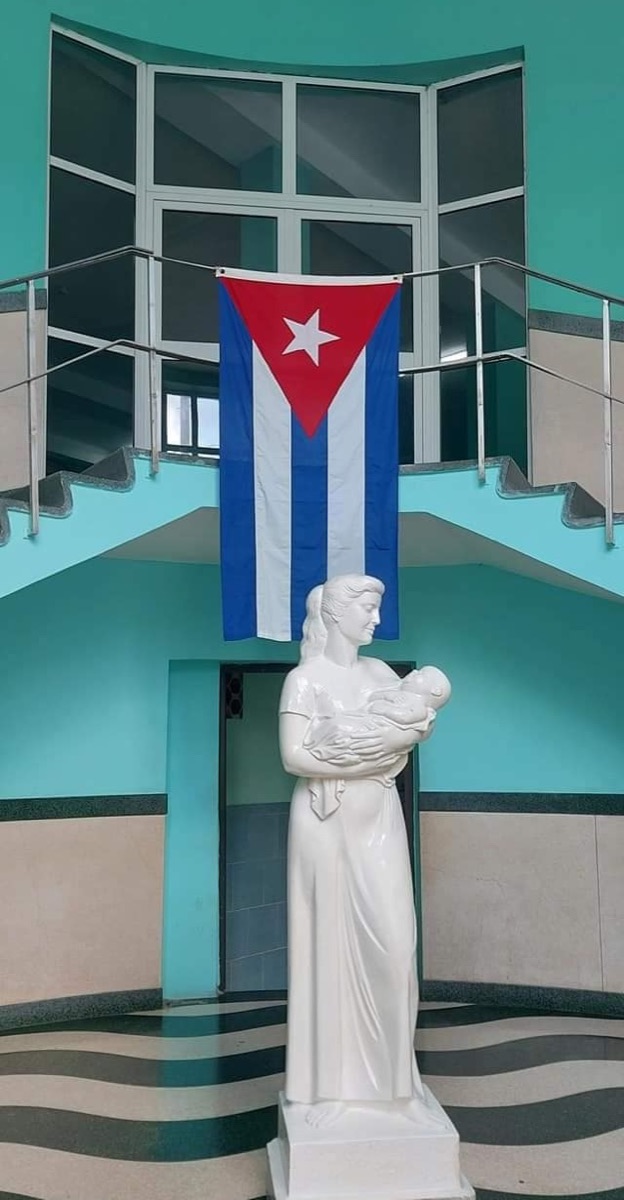
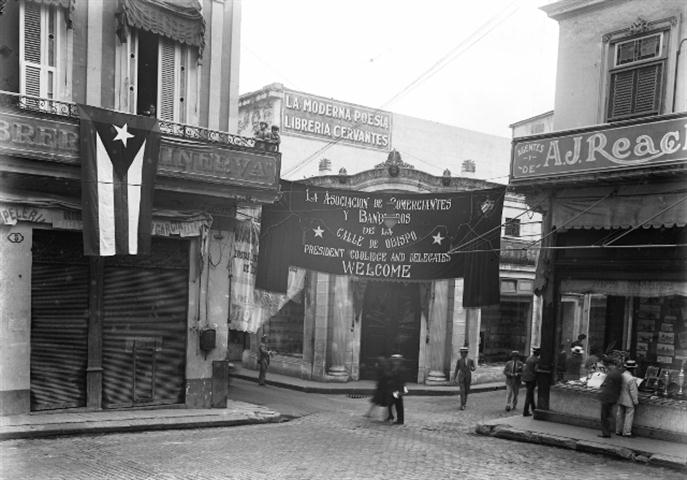
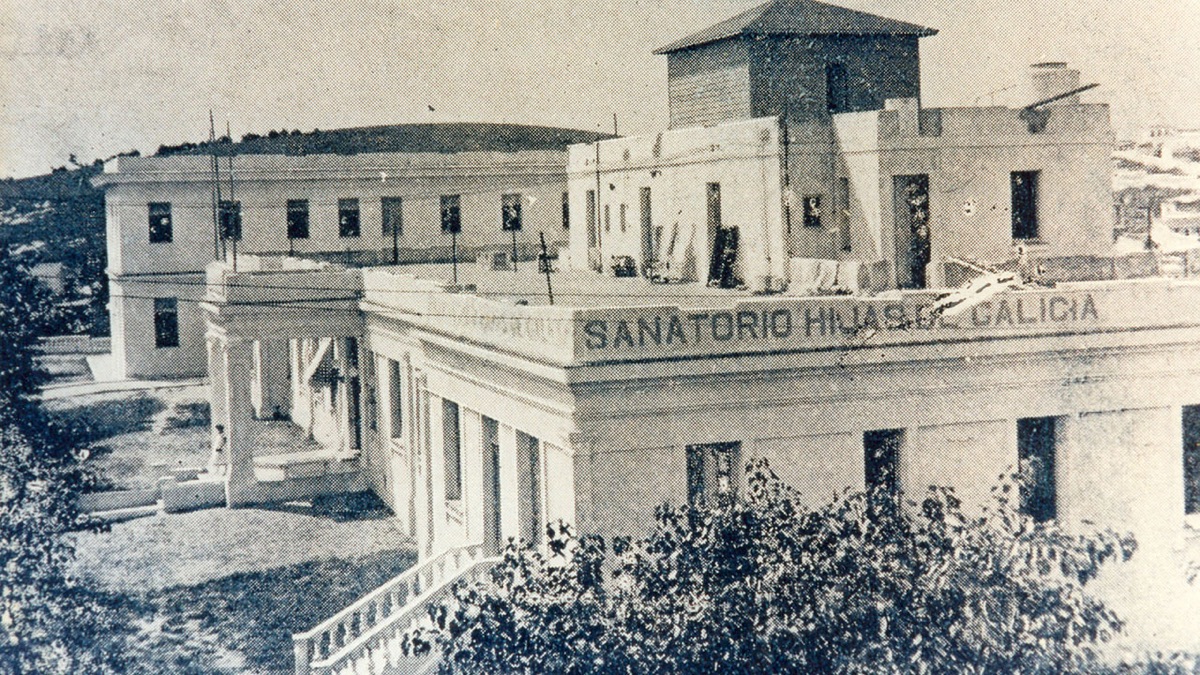
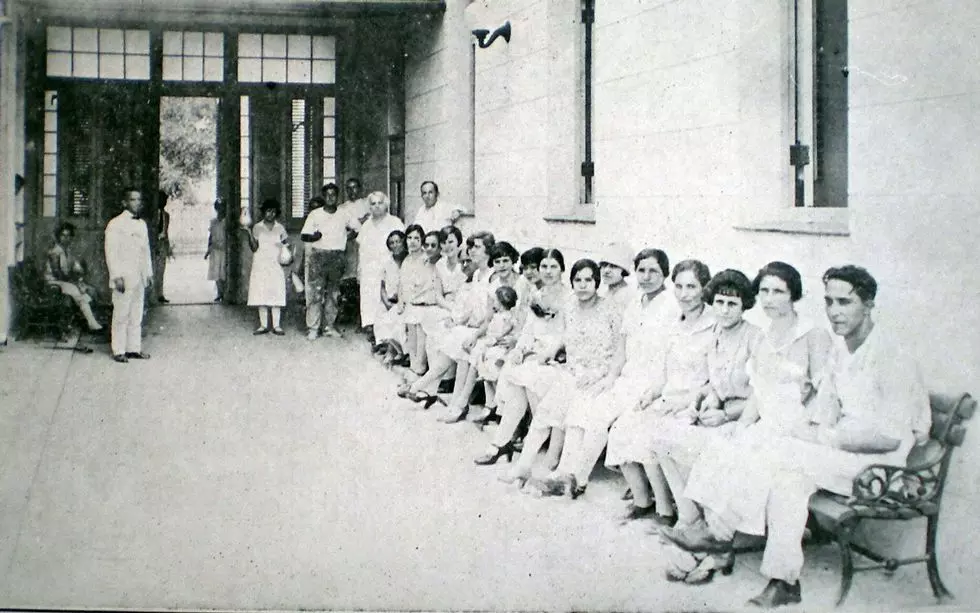
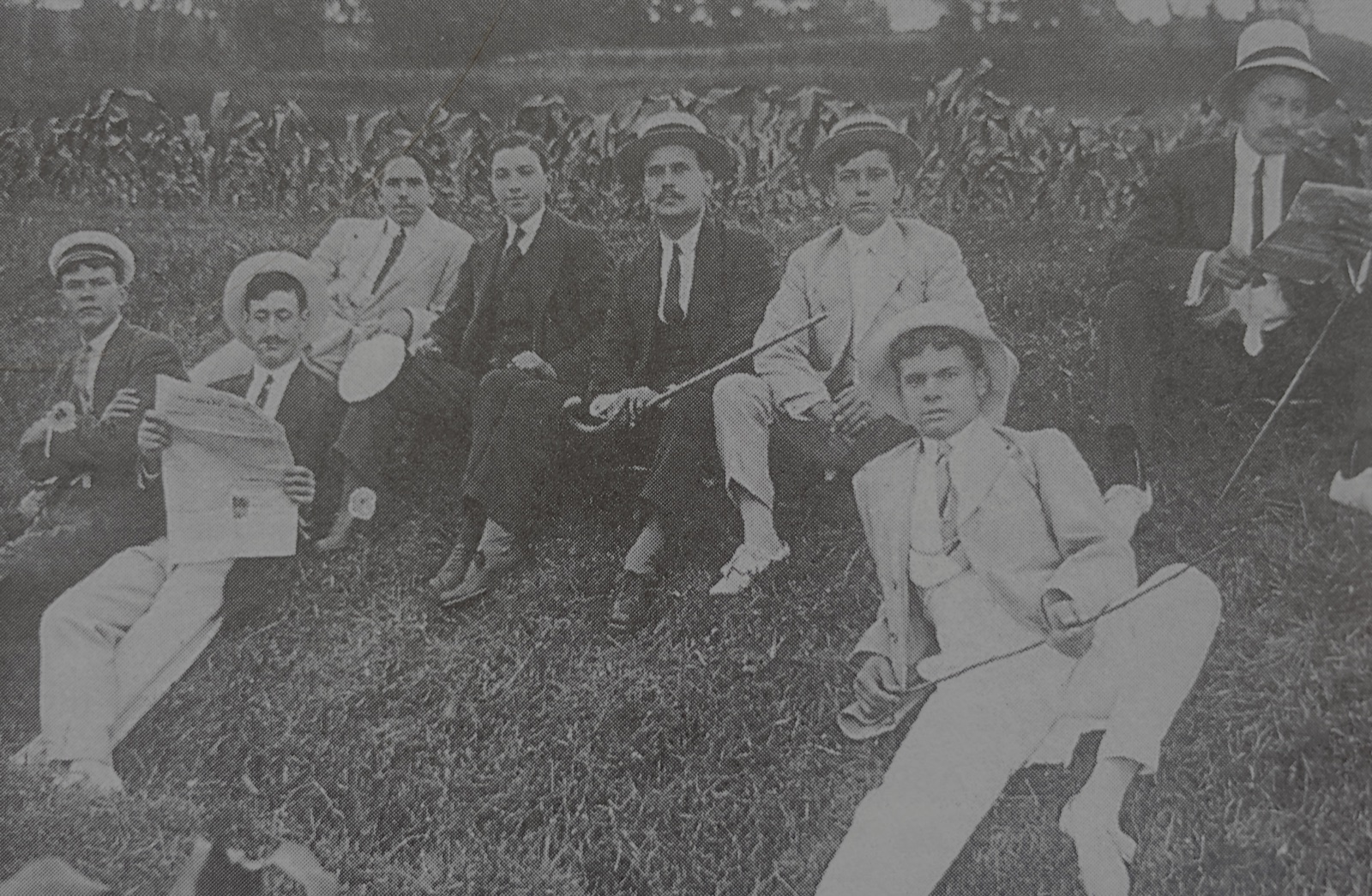
first: La Moderna Poesía. second: the Hijas de Galicia sanatorium. third: nurses of the Hijas de Galicia primeira: La Moderna Poesía. segunda: o sanatorio das Hijas de Galicia. terceira: enfermeiras das Hijas de Galicia
Chapter SixCapítulo sexto
The ReturnO Regreso
RemittancesAs Remesas
Most of the money that came back went into agriculture. It improved working conditions and household finances across the countryside, and it slowed the proletarianization of the small farmer. Emigrant savings bought the land that a smallholder would otherwise have had to leave.
A maior parte do diñeiro que volveu foi á agricultura. Mellorou as condicións de traballo e as finanzas domésticas en todo o rural, e frenou a proletarización do pequeno labrego. Os aforros do emigrante mercaron a terra que doutro xeito o minifundista tería que abandonar.
Emigrant remittances also shaped Galician finance. Banco Pastor, the second-oldest bank in Spain, began in A Coruña in 1776 as a merchant house whose shipping line ran to American ports; emigrants sent their savings home through it, and managing that flow is what turned a shipping business into a bank. It took the Pastor name in 1925.
As remesas dos emigrantes tamén moldearon as finanzas galegas. O Banco Pastor, o segundo banco máis antigo de España, naceu na Coruña en 1776 como casa mercantil cunha liña marítima cara a portos americanos; os emigrantes mandaban por ela os seus aforros á casa, e xestionar ese fluxo foi o que converteu un negocio naviero nun banco. Adoptou o nome Pastor en 1925.
But it is in culture and education that the mark of the Cuban Galicians is clearest. Money from Havana paid for monuments, theaters and cultural centers, among them the Curros Enríquez monument, the Escola de Artes e Oficios and the Teatro Rosalía de Castro.
Pero é na cultura e na educación onde a pegada dos galegos de Cuba se ve máis clara. O diñeiro da Habana pagou monumentos, teatros e centros culturais, entre eles o monumento a Curros Enríquez, a Escola de Artes e Oficios e o Teatro Rosalía de Castro.
And it paid for schools. Forty-six Galician educational societies were already operating in Havana; across Cuba the number reached 179. Between them they financed 336 schools in Galicia, against an estimated shortfall of some 2,250, in a country where illiteracy still ran near seventy per cent. The map below shows where they landed.
E pagou escolas. Corenta e seis sociedades de instrución galegas funcionaban xa na Habana; en toda Cuba chegaron a 179. Entre elas financiaron 336 escolas en Galiza, fronte a un déficit estimado dunhas 2.250, nun país onde o analfabetismo aínda rondaba o setenta por cento. O mapa de abaixo amosa onde foron parar.
Emigrant-funded schools by judicial district Escolas creadas pola emigración por partido xudicial
Hover a district for its count. Districts with no reported schools are dark gray. The historical districts of Meira, Ribadeo and Pontedeume are not separate units in this basemap and their counts are not merged. Source: Antón Costa, as reproduced in Fraga Rodríguez. Pasa o rato por un partido para ver a súa cifra. Os partidos sen escolas rexistradas aparecen en gris escuro. Os partidos históricos de Meira, Ribadeo e Pontedeume non son unidades separadas neste mapa base e as súas cifras non están fusionadas. Fonte: Antón Costa, reproducido en Fraga Rodríguez.
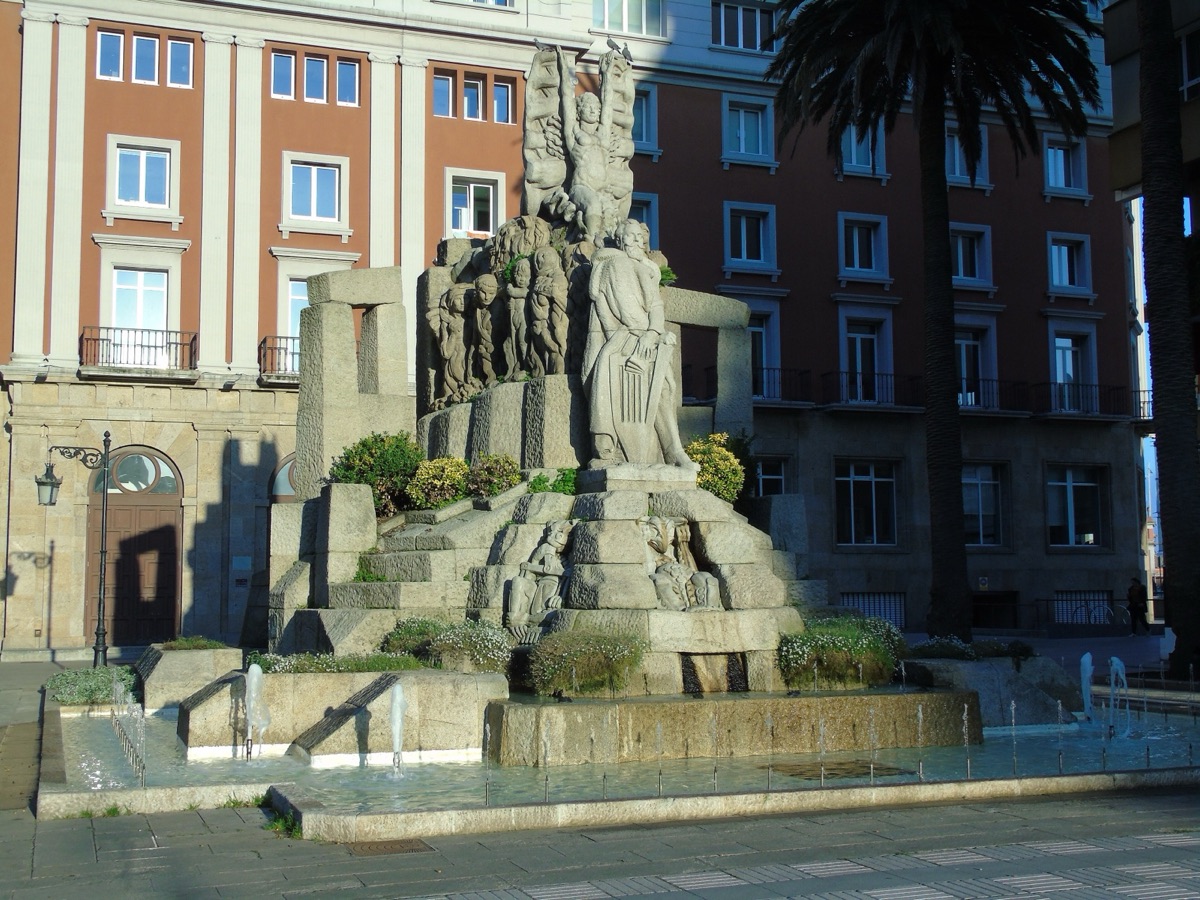
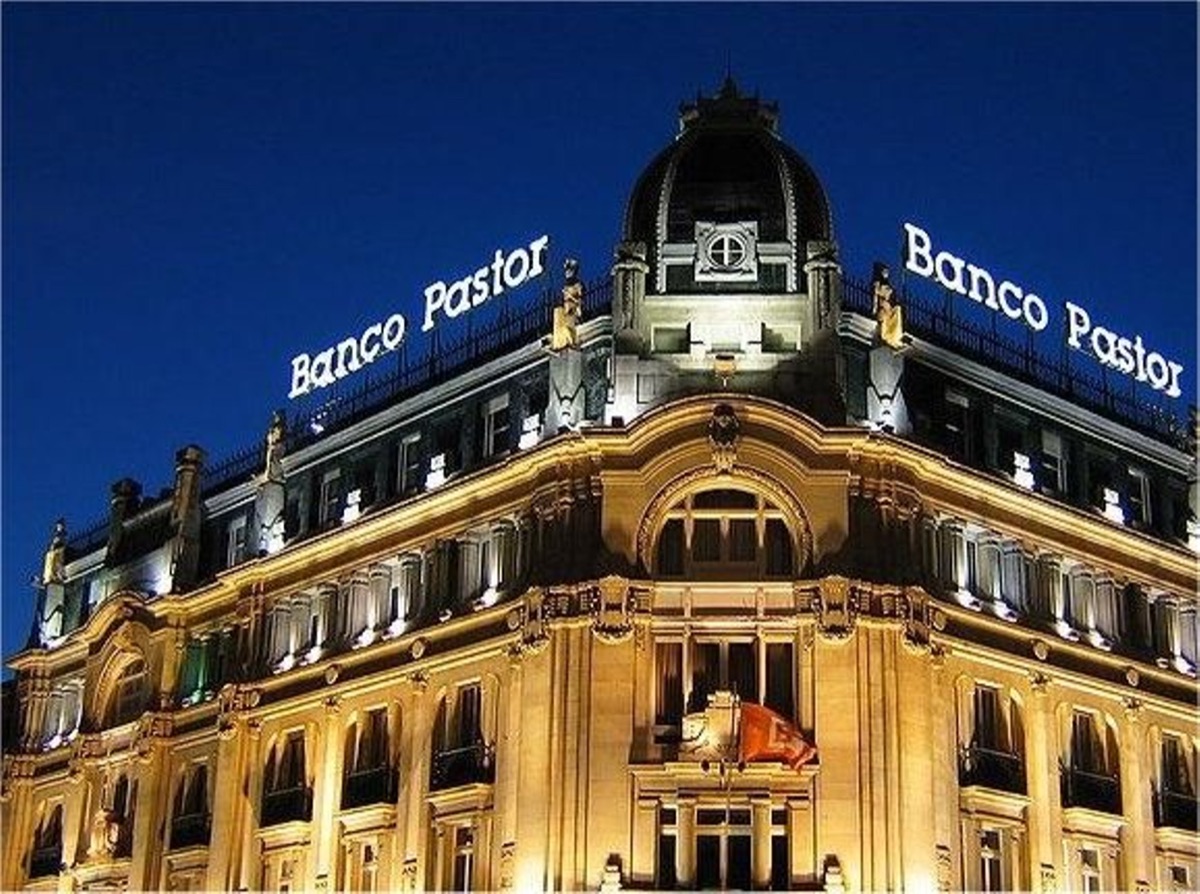
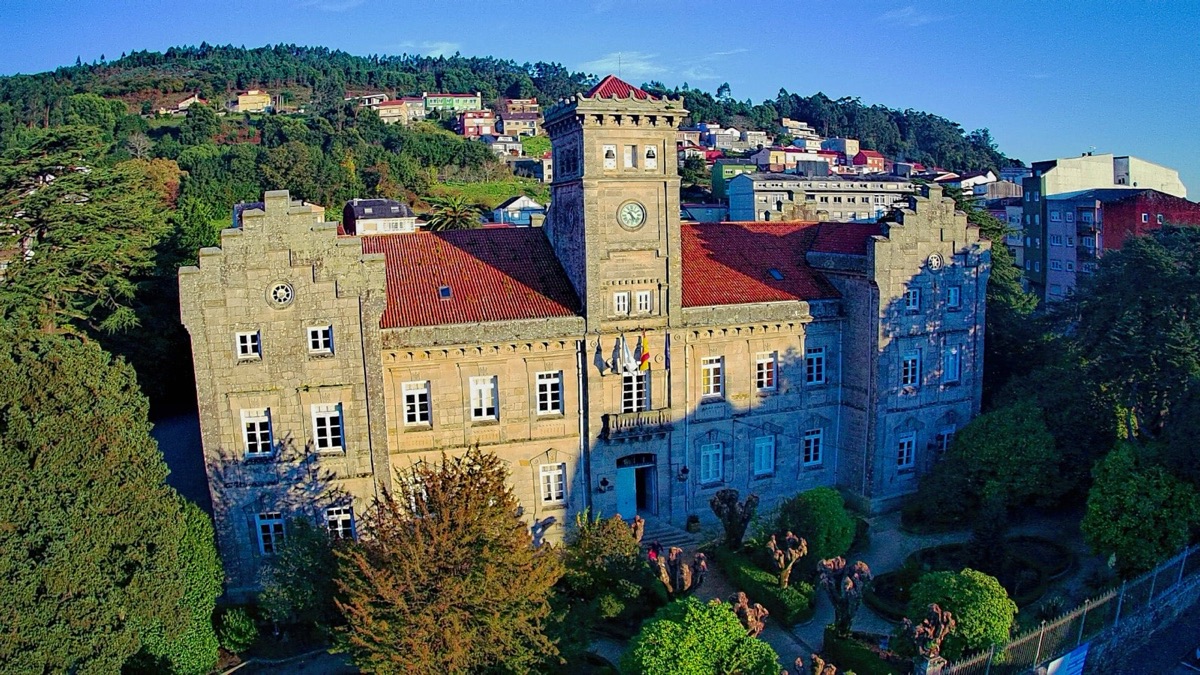
first: monument to Curros Enríquez, A Coruña. second: Banco Pastor, A Coruña. third: Instituto Fernando Blanco de Lema primeira: monumento a Curros Enríquez, A Coruña. segunda: Banco Pastor, A Coruña. terceira: Instituto Fernando Blanco de Lema
IndianosOs Indianos
The returning emigrant who had done well was called an indiano, and he was impossible to miss. He came back in a white suit and a felt hat, with boleros and habaneras, with a vocabulary his neighbors did not have, and with capital.
Ao emigrante que volvía tras facer fortuna chamábaselle indiano, e era imposible non velo. Voltaba con traxe branco e sombreiro de feltro, con boleros e habaneras, cun vocabulario que os seus veciños non tiñan, e con capital.
That capital rebuilt whole villages. Arquitectura indiana, with its verandas, glazed galleries, corner towers and tropical palettes on an Atlantic coast, is still the most visible measure of Cuban money in Galicia, and it turns up in private houses, in town halls and in the schools the emigrant societies paid for.
Ese capital reconstruíu vilas enteiras. A arquitectura indiana, coas súas galerías acristaladas, miradoiros, torres de esquina e paletas tropicais nunha costa atlántica, segue a ser a medida máis visible do diñeiro cubano en Galiza, e aparece en casas particulares, en concellos e nas escolas que pagaron as sociedades de emigrantes.
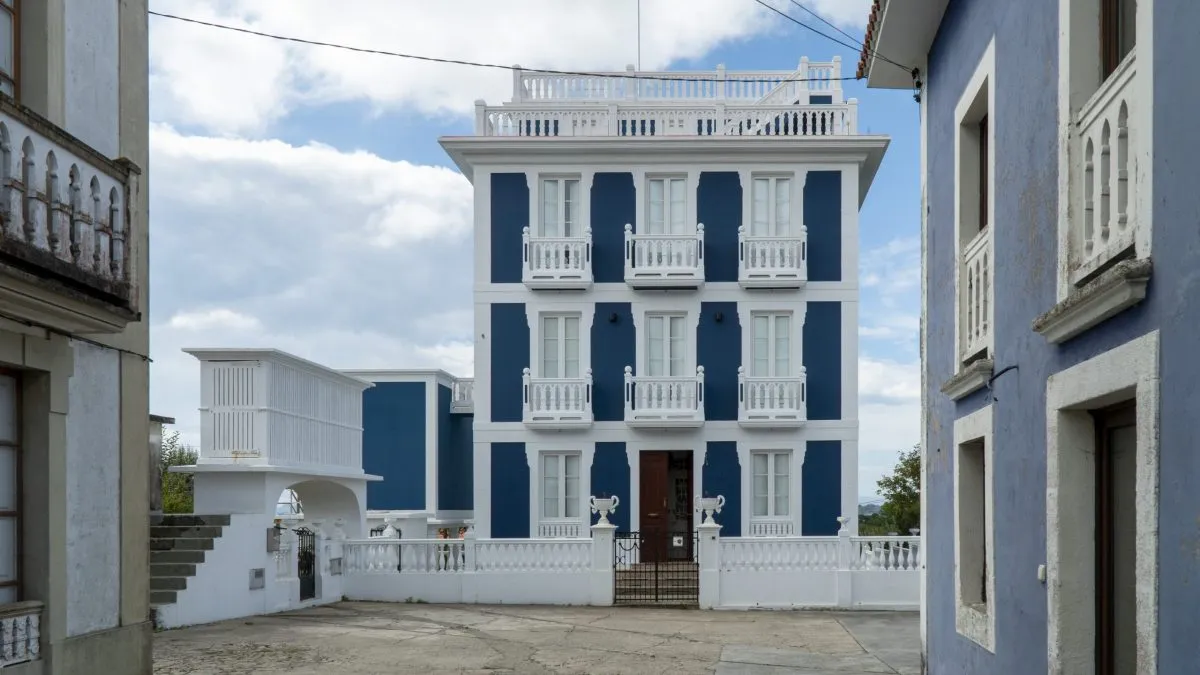
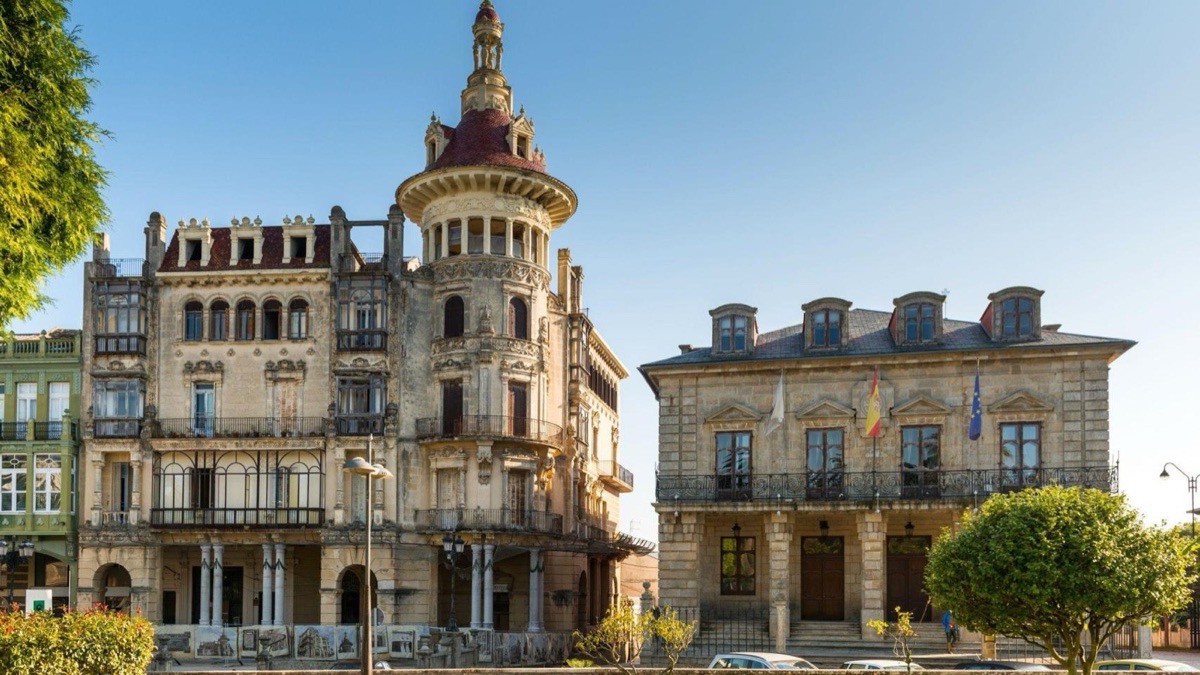
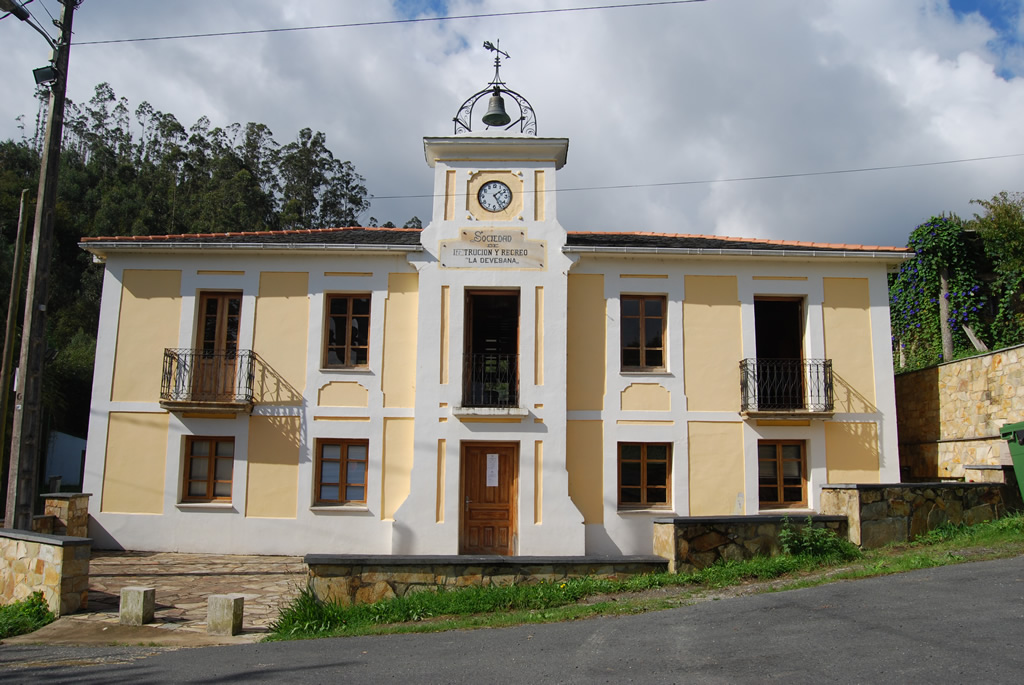
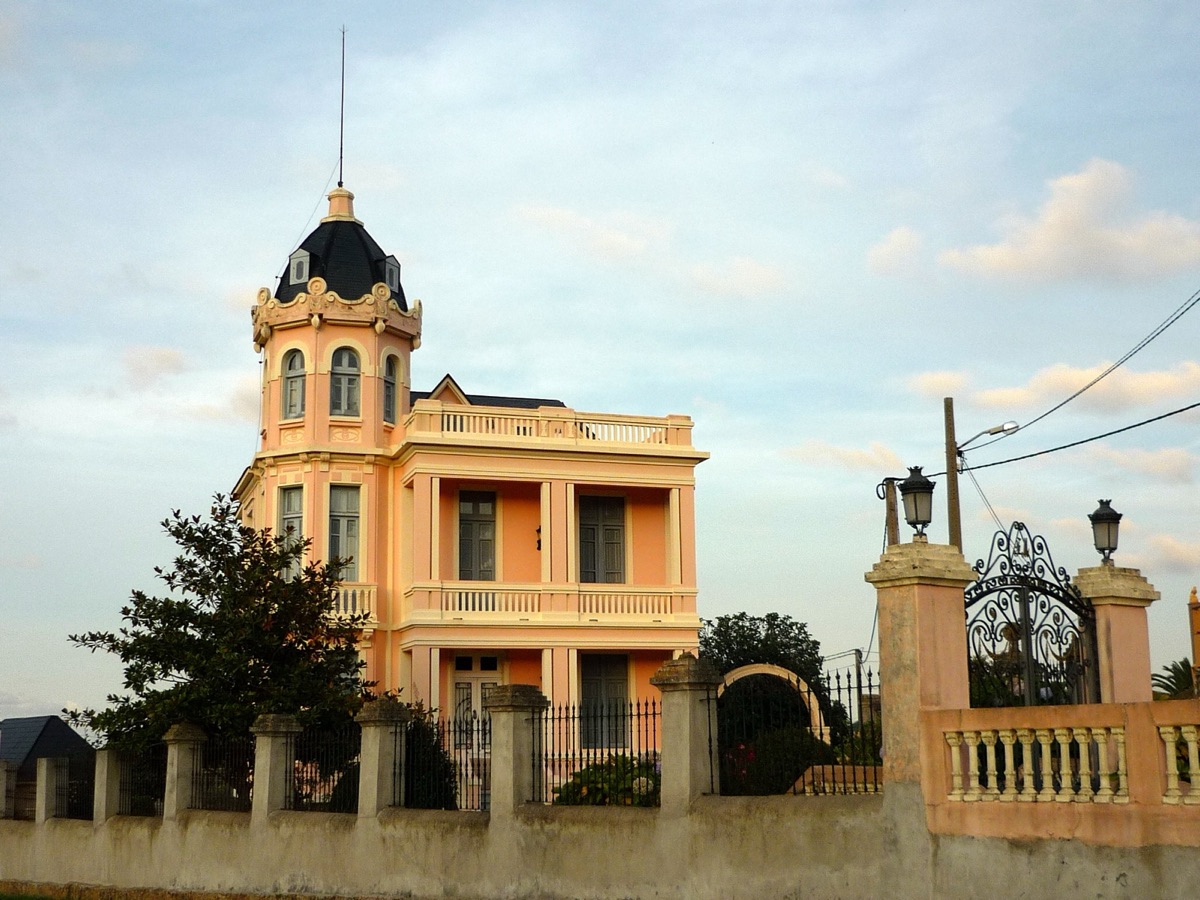
first: Casa dos Irmáns Moreno, Ribadeo. second: Escola La Devesana, Ortigueira. third: casa indiana, Barreiros primeira: Casa dos Irmáns Moreno, Ribadeo. segunda: Escola La Devesana, Ortigueira. terceira: casa indiana, Barreiros
Not everyone came home rich, and Galicia knew it. The proverb that survives about Havana money is not admiring.
Non todos volveron ricos, e Galiza sabíao. O refrán que sobrevive sobre o diñeiro da Habana non é de admiración.
“Here comes the tavern-keeper, here comes that rum, that money from Havana comes late and lasts little.” «Icha viño, taberneira, icha viño desa cuba, que o diñeiro da Habana tarde vén e pouco dura.»— Galician popular saying — Dito popular galego
CreditsCréditos
The primary source of research for this visualization, including archival images, is Emigración e Historia Contemporánea. Galiza-Cuba by Xan Fraga Rodríguez (A Coruña: AS-PG, 1994).
A fonte principal de investigación desta visualización, incluídas as imaxes de arquivo, é Emigración e Historia Contemporánea. Galiza-Cuba, de Xan Fraga Rodríguez (A Coruña: AS-PG, 1994).
Xan Fraga Rodríguez (Carballo, 1958) is a historian, teacher and writer. He holds a degree in Geography and History, specializing in Contemporary History, from the Universitat Central de Barcelona, and a diploma in advanced studies in Political Science from the Universidad Complutense de Madrid. He is a member of the Asociación de Escritores en Lingua Galega and of the Instituto de Estudos Bergantiñáns, and was named carballés do ano in 1997. Alongside the Galiza-Cuba study, his work includes the multi-volume Crónicas de Carballo, a photographic chronicle of his town, and studies of Alfredo Brañas and of the Nova Canción Galega.
Xan Fraga Rodríguez (Carballo, 1958) é historiador, profesor e escritor. É licenciado en Xeografía e Historia, especialidade de Historia Contemporánea, pola Universitat Central de Barcelona, e ten o diploma de estudos avanzados en Ciencias Políticas pola Universidade Complutense de Madrid. É membro da Asociación de Escritores en Lingua Galega e do Instituto de Estudos Bergantiñáns, e foi nomeado carballés do ano en 1997. Xunto ao estudo Galiza-Cuba, a súa obra inclúe os varios volumes das Crónicas de Carballo, unha crónica fotográfica da súa vila, e estudos sobre Alfredo Brañas e sobre a Nova Canción Galega.
-
Visualization produced byVisualización producida porAllen Shaibani
-
Content of Emigración e Historia Contemporánea interpreted byContido de Emigración e Historia Contemporánea interpretado porAllen Shaibani
-
Archival photographs and postcardsFotografías e postais de arquivoReal Academia Galega
-
Ferrol and Lugo harbor photographsFotografías dos portos de Ferrol e LugoArquivo Histórico Provincial de Lugo
-
Portrait of Urbano Feijoo de SotomayorRetrato de Urbano Feijoo de SotomayorBiblioteca Nacional de España
-
Judicial district boundariesLímites dos partidos xudiciaisInstituto Geográfico Nacional
-
School counts by districtEscolas por partidoAntón Costa Rico
Sources & Further ReadingFontes e Lecturas
- Emigración e Historia Contemporánea. Galiza-Cuba. A Coruña: AS-PG, 1994.
- Comercio exterior e atraso económico. Cited for the slaving-voyage and landing figures.Citado para as cifras de expedicións e desembarcos.
- Schools founded by emigrant societies, by judicial district.Escolas fundadas polas sociedades de emigrantes, por partido xudicial.
- “Sobre las motivaciones de la emigración gallega a América y otros aspectos: un enfoque comparativo.” R.C.G. 5º Centenario, no. 2, 1989.
- “Características de la inmigración española en Cuba, 1904–1930.”
- On the economic drivers of Galician emigration.Sobre os motores económicos da emigración galega.
- Galegos no Golfo de México.
- Coordenadas de la emigración gallega a América, 1850–1930; Emigración gallega a América.
- “¡Pra a Habana!”, Follas Novas. Madrid & Havana, 1880.
For Pepa and Jose Maria Para Pepa e Jose Maria